You’ve just brought your precious baby home, and the world feels full of wonder and new experiences. But as your little explorer starts to become more mobile, a new kind of wonder emerges: a growing concern for their safety. Suddenly, that cozy living room looks like a minefield of potential hazards.
This guide will help you with effective baby proofing your home, transforming your space into a secure haven so you can focus on enjoying those precious early moments without constant worry. You’ll learn practical tips and easy solutions to create a safe environment for your growing child.
Key Takeaways
- Understand the common dangers in a typical home for babies.
- Learn how to secure electrical outlets and cords.
- Discover methods for preventing falls and trips.
- Master techniques for childproofing cabinets and drawers.
- Identify ways to make bathrooms and kitchens safer.
- Get tips for creating a safe nursery and play areas.
Creating a Safe Environment Baby Proofing Your Home
Making your home safe for a baby is a vital step for any parent. As infants grow into curious toddlers, their exploration of the world around them expands dramatically. This exploration, while wonderful, can also expose them to unseen dangers within the home.
The goal of baby proofing is to anticipate these risks and eliminate them before they become accidents. It’s about creating a secure space where a child can learn, play, and grow without unnecessary hazards.
This section will cover the foundational aspects of baby proofing your home. We’ll look at common household dangers and how to address them. Understanding the typical risks is the first step in creating a safe haven.
It’s not about creating a sterile environment, but a controlled one.
Assessing Potential Hazards
Before you start purchasing safety gadgets, take some time to look at your home from your baby’s perspective. Get down on your hands and knees. What looks interesting and reachable?
What could a curious little hand grab, pull, or climb? Common culprits include electrical outlets, cords, sharp furniture corners, unsecured heavy items, and cleaning supplies.
Think about the different stages of development. A crawling baby will discover different dangers than a walking toddler. For instance, a crawling baby might be drawn to low-hanging cords, while a toddler might attempt to climb furniture.
Anticipating these behaviors is key to effective baby proofing your home.
-
Electrical Cords and Outlets: These are attractive to babies who explore with their hands and mouths. Exposed outlets can lead to electric shock, and dangling cords pose a strangulation risk.
Electrical outlets are everywhere in our homes, and they can be incredibly dangerous for babies. They contain live electricity that can cause severe injury or even death if a baby inserts something into them. Similarly, electrical cords from lamps, appliances, and electronics can be tempting to chew on or pull, potentially damaging the cords or the devices they are connected to, leading to shocks or fires.
Keeping cords tucked away and outlets covered is a primary safety measure.
-
Furniture Edges and Corners: Sharp corners on tables, coffee tables, and countertops can cause bumps and bruises, or even cuts if a child falls. Tipping furniture like bookshelves or dressers can cause serious injury or entrapment.
Babies learning to crawl and walk are prone to falling. If they fall onto a hard surface with sharp edges, the impact can be quite painful and potentially lead to injuries. Even a small bump can cause a nasty bruise or a cut.
Furniture tipping is another significant concern. Heavy items like bookcases, chests of drawers, or entertainment units, if not properly secured, can topple over if a child tries to climb them or pulls on them, trapping the child underneath. This can result in severe injuries or fatalities.
-
Small Objects and Choking Hazards: Anything small enough to fit through a toilet paper roll tube is a potential choking hazard for babies. This includes coins, buttons, small toy parts, and even certain types of food.
Babies explore the world using their mouths, and this includes putting everything they can find into their mouths. Small objects are particularly dangerous because they can easily become lodged in a baby’s airway, causing them to choke. This is a rapid and life-threatening emergency.
Common household items like coins, batteries, marbles, buttons, small toy pieces, and even spilled pills can pose a serious choking risk. Regularly sweeping floors and tidying up is essential.
Securing Your Living Spaces
Once you’ve identified the hazards, it’s time to implement safety measures. This involves a combination of physical barriers, secure fastenings, and careful organization. The goal is to make your home as accident-proof as possible without making it feel restrictive.
For the living room, focus on covering outlets, securing furniture, and managing cords. In the kitchen and bathroom, specific attention is needed for chemicals, appliances, and water safety. The nursery should be a sanctuary of safety, with nothing posing a risk to a sleeping or playing infant.
Even hallways and staircases require attention to prevent falls.
Electrical Safety for Little Explorers
Protecting your baby from electrical hazards is paramount. This involves covering all unused electrical outlets and managing any accessible cords.
When it comes to baby proofing your home, electrical outlets are a top priority. Babies are naturally curious and often put their fingers or objects into these openings, which can lead to severe electric shock. Outlet covers are a simple yet effective solution.
They come in various types, including simple plug-in caps and sliding plate covers that make it harder for a child to remove them. Ensure all outlets in areas where your baby can reach are covered, even those you think are out of reach.
Electrical cords are another concern. Dangling cords from blinds, lamps, or electronics can be a strangulation hazard or can be pulled down, bringing the connected device with them. Use cord shorteners or cord covers to keep them out of reach.
For window blind cords, consider cordless options or tie them up securely high out of reach. This is an important aspect of baby proofing your home that often gets overlooked.
-
Outlet Covers: These are small, inexpensive devices that fit into unused electrical outlets, preventing a baby from inserting their fingers or objects into the socket.
There are several types of outlet covers available. The simplest are the individual plastic caps that push into the outlet. These are easy to install and remove but can sometimes be pulled out by determined babies.
Sliding outlet covers are a more secure option. They are part of the entire outlet plate and have a mechanism that allows you to slide a cover over the openings when not in use. Some even require two buttons to be pressed simultaneously to open, making them much harder for a child to operate.
Regular checks are important to ensure they are still securely in place and haven’t been loosened.
-
Cord Management: This involves securing electrical cords, blind cords, and other accessible cords to prevent strangulation or pulling hazards.
Electrical cords from lamps, TVs, computers, and other appliances can be tempting for babies to chew on or pull. If a cord is damaged, it can pose a fire hazard or lead to electric shock. Securing them with cord clips, wraps, or raceways keeps them tidy and out of reach.
For window blind cords, which are a serious strangulation risk, it’s best to use cordless blinds. If you have corded blinds, ensure the cords are tied up high on the wall, well out of reach, using a cord cleat or a similar device. This is a critical step in baby proofing your home.
Preventing Falls and Protecting Little Heads
Falls are a common cause of injury for babies and toddlers. Addressing potential fall risks is a major part of baby proofing your home.
From the moment a baby starts to roll, the risk of falling from elevated surfaces increases. This includes changing tables, beds, sofas, and stairs. Always stay within arm’s reach and never leave a baby unattended on an elevated surface, even for a moment.
Baby proofing involves creating barriers and securing areas where falls are most likely.
Stairs are a significant concern. For babies who are crawling or just beginning to walk, stairs can be a treacherous obstacle. Installing sturdy gates at the top and bottom of staircases is essential.
Ensure the gates are hardware-mounted for stairs, as pressure-mounted gates can be dislodged. For doorways and hallways, gates can also help limit access to unsafe areas.
-
Stair Gates: Secure barriers installed at the top and bottom of stairs to prevent babies from falling or tumbling down.
Stairs present one of the most significant fall hazards in a home. Babies who are crawling or learning to walk can easily attempt to navigate them, leading to serious injury. For this reason, installing safety gates is crucial.
It’s important to use hardware-mounted gates at the top of the stairs, as these are securely screwed into the wall and are much less likely to be pushed over. Pressure-mounted gates are generally suitable for the bottom of stairs or for doorways. Ensure the gates have vertical slats that cannot be climbed and that there are no large gaps a baby could get stuck in.
Regularly check the gates for sturdiness and proper installation.
-
Furniture Anchoring: Securing heavy furniture like bookshelves, dressers, and entertainment units to the wall to prevent them from tipping over.
Heavy furniture, especially tall pieces like bookcases, chests of drawers, and entertainment units, can pose a serious tip-over hazard. Babies are naturally curious and will often try to climb these items to reach toys or explore. If the furniture is not anchored, it can topple over onto the child, causing severe injury or even death.
Most furniture comes with anti-tip kits, which include straps or brackets that attach the furniture to the wall studs. It is essential to install these kits correctly and securely. This is a fundamental step in baby proofing your home that can save a life.
-
Corner Guards: Soft padding applied to the sharp edges and corners of furniture like coffee tables and countertops to cushion accidental bumps.
Even with careful supervision, babies will inevitably bump into furniture as they learn to move around. Sharp corners on coffee tables, hearths, and countertops can cause painful bruises or cuts. Applying soft corner guards made of foam or rubber can significantly reduce the risk of injury from these impacts.
These guards adhere to the furniture with strong adhesive and provide a cushioned surface. Ensure they are securely attached so they cannot be pulled off and become a choking hazard themselves. Regular inspection is recommended to maintain their effectiveness.
Childproofing Cabinets and Drawers
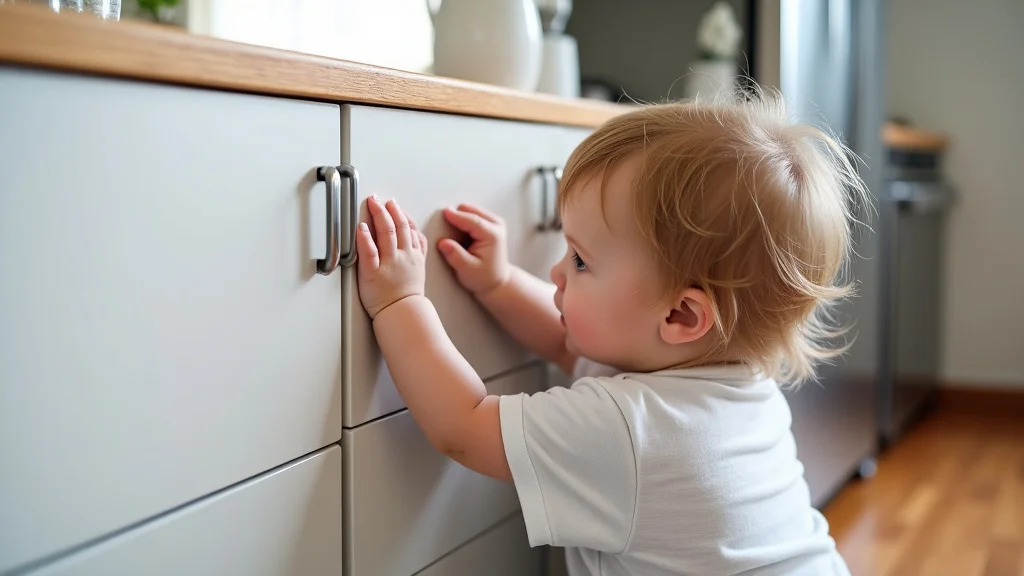
Cabinets and drawers can contain a surprising number of dangers, from cleaning supplies to sharp objects. Securing them is a key part of baby proofing your home.
Babies and toddlers are fascinated by opening things and pulling items out. What might seem like a harmless kitchen drawer can contain knives or cleaning products. Similarly, bathroom cabinets often hold medications and toiletries.
Childproofing these storage areas prevents access to hazardous items and keeps tiny fingers from getting pinched.
Various types of childproof latches are available, catering to different cabinet and drawer designs. Magnetic latches, for instance, are invisible from the outside and are activated by a magnetic key. Simple adhesive latches can be applied to the inside of doors and drawers, making them difficult for children to open.
For more traditional cabinets with knobs or handles, strap latches can be used to tie them shut.
Securing Kitchen and Bathroom Hazards
The kitchen and bathroom are two areas with a high concentration of potential dangers for babies and toddlers. Careful baby proofing is essential.
In the kitchen, cleaning supplies, medications, sharp utensils, and hot appliances are major concerns. All cleaning products and chemicals should be stored in high, locked cabinets. Knives and other sharp objects should also be kept out of reach.
When using the stove, always turn pot handles inward. Consider oven locks and appliance locks for added safety. The dishwasher and refrigerator should also be secured with latches.
The bathroom presents its own set of risks. Medications, cleaning supplies, and unsecured toiletries need to be stored safely. Water temperature should always be checked before bathing to prevent burns.
Toilet lid locks can prevent babies from falling into the toilet or playing with the water. Ensure all toiletries and medicines are kept in locked cabinets or out of reach.
-
Cabinet and Drawer Latches: Devices that prevent babies from opening cabinets and drawers where dangerous items like cleaning supplies or sharp objects are stored.
These latches come in many varieties, each designed to be effective for different types of cabinets and drawers. Adhesive latches are popular because they are easy to install and don’t require drilling. They stick to the inside of the cabinet door and frame, creating a secure lock.
Magnetic latches are another great option; they are completely hidden from view and require a special magnetic “key” to open. This makes them very difficult for children to figure out. For drawers, you can find special drawer stops that prevent them from being pulled out too far, or full drawer latches that secure them shut.
Choosing the right type depends on your furniture and your child’s dexterity.
-
Stove and Oven Safety: Measures to prevent babies from accessing hot stoves or ovens, reducing the risk of burns.
The kitchen stove and oven are sources of significant heat and pose a serious burn risk. Babies are drawn to the knobs and controls. Stove knob covers are essential to prevent a baby from turning on the gas or electric burners.
Oven door locks prevent them from opening the oven door while it is hot or during use. Many modern ovens have built-in safety features, but older models may require additional childproofing accessories. Turning pot handles inward on the stove is also a good practice to prevent them from being pulled down.
-
Toilet Lid Locks: Devices that secure the toilet lid, preventing babies from opening it, falling in, or playing with the water.
Toilets can be a surprisingly dangerous place for babies. They can fall in headfirst, leading to drowning or injury. They might also be fascinated by flushing the toilet repeatedly, wasting water, or playing with the toilet brush.
Toilet lid locks prevent the lid from being opened. These are typically simple plastic latches that adhere to the toilet lid and bowl. They are easy for adults to operate but are designed to be difficult for babies to disengage.
This simple step can prevent a serious accident in the bathroom.
Creating Safe Play Areas and Nurseries
Your baby’s play area and nursery should be sanctuaries of safety and comfort. Thorough baby proofing in these areas ensures peace of mind.
The nursery needs to be safe from the moment your baby arrives. Cribs should meet current safety standards with no gaps where a baby could get stuck. Ensure there are no dangling strings or cords near the crib.
Toys should be age-appropriate and free from small parts that could be a choking hazard. Crib bumpers are no longer recommended due to suffocation risks.
Play areas, whether a dedicated room or a section of the living room, should be free of hazards. Soft flooring, like play mats, can cushion falls. Remove any small toys or objects that could be a choking hazard.
Ensure any furniture in the play area is stable and anchored. Gates can help contain the play area and keep children away from other unsafe parts of the house.
Nursery Safety Essentials
The nursery is where your baby will spend a significant amount of time sleeping and playing. Safety here is paramount.
When setting up a nursery, crib safety is the first priority. Ensure the crib meets current safety standards. Avoid placing the crib near windows with cords, or placing bumpers, pillows, or loose bedding inside the crib, as these can pose suffocation risks.
Toys in the nursery should be age-appropriate and free of small, detachable parts. Mobile toys should be securely attached and out of reach. Ensure changing tables have safety straps and never leave your baby unattended on one.
Dressers and other furniture should be anchored to the wall.
Electrical outlets in the nursery should be covered. Any blinds or curtains should have their cords secured high out of reach. Room thermometers can help maintain a safe and comfortable temperature.
Baby monitors are useful for keeping an eye on your baby while they sleep.
-
Crib Safety Standards: Ensuring the crib meets current safety guidelines to prevent entrapment, suffocation, or falls.
Crib safety is a critical component of nursery baby proofing. Modern cribs must meet stringent safety standards set by organizations like the Consumer Product Safety Commission (CPSC) in the US. This includes specific slat spacing to prevent a baby’s head from getting stuck, a firm mattress that fits snugly without gaps, and a sturdy design that won’t collapse.
Avoid older cribs with drop-side rails, which have been banned due to safety concerns. Always follow the manufacturer’s assembly instructions and regularly check for loose hardware or damaged parts. Never place pillows, blankets, or stuffed animals in the crib with a sleeping infant, as these are suffocation hazards.
-
Toy Safety: Selecting toys that are age-appropriate and free from choking hazards or sharp edges.
As babies grow, they are introduced to a variety of toys. It’s essential to choose toys that are specifically designed for their age group. Toys for infants should be large enough not to be swallowed or lodged in the throat.
Avoid toys with small, detachable parts like buttons, beads, or eyes that can easily break off. Inspect toys regularly for any damage, such as cracks or sharp edges that could injure your baby. For older babies and toddlers, ensure they understand how to use toys safely and supervise their play, especially with toys that have moving parts or require assembly.
Common Myths Debunked
Myth 1: Baby proofing is too expensive
Many effective baby proofing solutions are very affordable. Simple items like outlet covers, cabinet latches, and corner guards are inexpensive. You can even use household items like rolled-up towels to block small gaps or old socks to cover sharp corners in a pinch.
Prioritizing the most critical hazards first can help manage costs. The investment in safety far outweighs the potential cost of an accident.
Myth 2: You only need to baby proof when the baby starts crawling
Babies can get into trouble much earlier than crawling. Even newborns can roll off changing tables or beds. As soon as your baby can lift their head and neck, or begins to show signs of independent movement, baby proofing should be a consideration.
It’s a proactive process that evolves as your child grows and their mobility increases.
Myth 3: Baby proofing makes the house look unattractive
Modern baby proofing products come in a variety of styles and colors, designed to blend in with home decor. Many solutions are discreet and hardly noticeable. Furthermore, the peace of mind that comes from a safe home is far more valuable than any aesthetic concern.
Functionality and safety should always take precedence when it comes to protecting your child.
Myth 4: My child is very cautious, so I don’t need to baby proof
A child’s temperament doesn’t negate the inherent dangers in a home environment. Even the most cautious child can have moments of impulsive curiosity or accident-prone activity. Babies and toddlers are still developing their motor skills and understanding of cause and effect.
Baby proofing is about protecting them from hazards they cannot yet comprehend or avoid.
Frequently Asked Questions
Question: When should I start baby proofing my home
Answer: It is best to start baby proofing before your baby begins to show signs of independent movement, such as rolling over or crawling. Many parents begin around 4-6 months of age, but it’s never too early to assess potential hazards.
Question: What are the most important areas to baby proof
Answer: Key areas include electrical outlets, stairs, cabinets and drawers containing hazardous items, and any furniture with sharp edges or that could tip over. The kitchen and bathroom also require special attention.
Question: Are magnetic cabinet locks safe
Answer: Yes, magnetic cabinet locks are generally considered safe and effective for baby proofing. They are hidden, making them difficult for children to find or operate, and they prevent access to potentially dangerous items.
Question: How can I protect my baby from falling
Answer: Use safety gates at the top and bottom of stairs, anchor furniture to walls to prevent tipping, and use corner guards on sharp furniture edges. Never leave a baby unattended on high surfaces like changing tables or beds.
Question: Do I need to baby proof my entire house
Answer: It is recommended to baby proof all accessible areas where your child spends time. Focus on the most immediate hazards first, and then expand your efforts as your child becomes more mobile and adventurous.
Wrap Up
Creating a safe space for your baby involves being aware of potential dangers and taking simple, effective steps to mitigate them. From securing electrical outlets to anchoring furniture, each measure contributes to a secure environment. Baby proofing your home allows your little one to explore and grow with confidence, giving you peace of mind to cherish every moment.