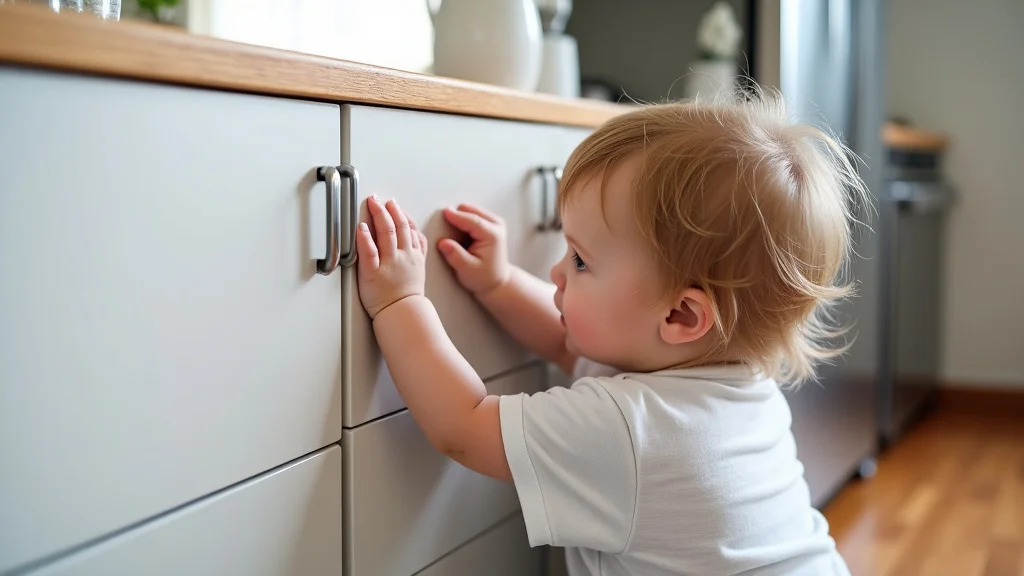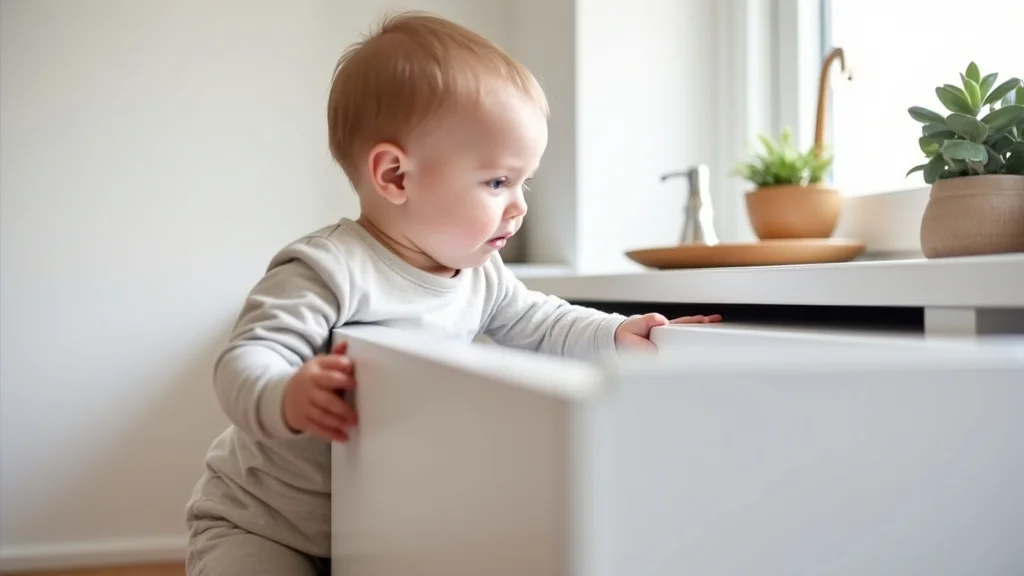
Little explorers are curious, and that curiosity can lead them into places you least expect. One minute your baby is happily playing with toys, and the next they’re at the kitchen cabinet, fascinated by what’s inside. The fear of them reaching something dangerous, like cleaning supplies or sharp objects, is a common worry for parents.
This post will guide you through the best ways to secure your cabinets and drawers, giving you peace of mind and keeping your little one safe.
Key Takeaways
- Learn about different types of cabinet and drawer locks.
- Discover the importance of strategic placement for safety.
- Understand how to childproof sharp objects and chemicals.
- Get tips on maintaining safety as your child grows.
- Find out how to choose the best safety locks for your home.
Securing Cabinets and Drawers for Babies
As babies grow into toddlers, their world expands, and so does their urge to explore. This exploration often leads them to the most fascinating places, like the contents of your kitchen cabinets and bathroom drawers. These areas, while convenient for adults, can pose significant risks to young children.
They might contain cleaning products, sharp utensils, medications, or even small items that could be choking hazards. The primary goal of baby proofing cabinets and drawers is to prevent access to these dangers, creating a safer environment for your child to move and play in.
Effective baby proofing cabinets and drawers involves more than just slapping on a few locks. It’s about understanding what’s stored inside, where it’s stored, and what your child is capable of reaching and manipulating. A comprehensive approach considers different types of latches and locks, their installation, and how to adapt your safety measures as your child’s development progresses.
This proactive approach ensures that your home remains a safe haven, allowing your child to explore freely without undue risk.
Types of Safety Latches and Locks
There are many options available to help with baby proofing cabinets and drawers, each with its own advantages. Choosing the right kind depends on the type of cabinet or drawer you have and your child’s current and future abilities. Some are simple, while others offer more robust security.
Understanding these options is the first step in creating a secure home environment.
Adhesive Magnetic Locks
These are a very popular choice for baby proofing cabinets and drawers because they are installed inside the cabinet or drawer, making them invisible from the outside. This means your cabinets retain their original look. They work with a magnetic key that you keep separate.
When the door is closed, a magnetic bolt engages, keeping the drawer or cabinet firmly shut. To open it, you simply hold the magnetic key against the outside of the cabinet door at the lock’s location. This system is effective because the child cannot see or reach the locking mechanism itself, making it much harder for them to figure out how to open it.
The adhesive backing means there’s no need to drill holes, which is a big plus for renters or those who want to preserve the finish of their furniture.
- Pros: Invisible from the outside, no drilling required, strong hold.
- Cons: Requires the magnetic key to open, can be tricky to install perfectly aligned, battery-powered models need battery changes.
- Best for: Kitchen cabinets, bathroom vanities, drawers containing hazardous items.
Spring-Loaded Latches
These are another common type of lock used for baby proofing cabinets and drawers. They attach to the outside of the cabinet door or drawer front and the frame. To open, you press down on a lever or button, which disengages the latch.
While they are visible from the outside, they are generally easy for adults to operate. Many come with adhesive backing, similar to magnetic locks, but some require screws for a more permanent and secure installation. The spring mechanism allows the latch to snap back into place automatically when the door is closed, re-locking it.
This makes them convenient for high-traffic areas where you might need to access cabinets frequently.
- Pros: Easy for adults to operate, quick to re-lock, many adhesive options.
- Cons: Visible from the outside, some children can learn to operate them.
- Best for: Cabinets and drawers that are frequently accessed, but still need childproofing.
Slide Locks
Slide locks are designed for cabinets with two handles or knobs that are close together. They are made of plastic and simply slide between the two handles, preventing the doors from opening. They are very easy to use; you just slide them on or off.
Because they don’t require any adhesive or screws, they are a great option for renters or for temporary baby proofing. They are also simple to transport and use when traveling. The effectiveness of slide locks depends on the distance between the knobs; they are not suitable for all cabinet styles.
They work by physically blocking the doors from sliding apart or being pulled open.
- Pros: No installation required, portable, easy for adults to use.
- Cons: Only work on specific cabinet/drawer types, some children can eventually learn to slide them off.
- Best for: Cabinets with side-by-side knobs or handles.
Cord or Strap Locks
These are versatile locks that use a flexible strap or cord to secure doors and drawers. They typically adhere to the surface and loop around the edge of the door or drawer. To open, you press a button or release mechanism on the strap.
They can be used on a variety of surfaces and are particularly useful for cabinets that open outwards or have curved edges where other locks might not fit. The flexibility of the strap allows them to conform to different shapes. Some are designed to be permanently attached with screws for added security, while others use strong adhesive.
- Pros: Versatile for various cabinet types, easy to install, good for curved edges.
- Cons: Visible from the outside, can sometimes be defeated by persistent toddlers.
- Best for: Appliances, cabinets with rounded corners, refrigerator doors.
Deadbolt or Pinch Proof Latches
These latches are installed on the inside of cabinet doors and drawers. They often work by requiring you to press a small tab or button on the latch to release the door. Some models are designed to be “pinch-proof,” meaning they prevent little fingers from getting caught when the door is closed.
They are a more permanent solution and usually require screws for installation. Their internal placement means they are invisible from the outside, maintaining the aesthetic of your cabinetry. These are generally considered more secure than external latches.
- Pros: Invisible from the outside, high security, pinch-proof designs available.
- Cons: Requires drilling and screw installation, can be more complex to operate for adults.
- Best for: High-risk cabinets and drawers where maximum security is needed.
Strategic Placement and Common Hazard Areas
When you’re baby proofing cabinets and drawers, think like your child. Where are the most interesting or dangerous things stored? Focus your efforts on the areas that pose the greatest risk.
This means identifying the cabinets and drawers that contain items you absolutely don’t want your little one to access.
The kitchen is often the first place parents think of. Cabinets and drawers at floor level are prime targets for curious toddlers. These often hold cleaning supplies, detergents, trash cans, or heavy pots and pans.
Similarly, drawers containing knives, scissors, or other sharp utensils need to be secured. Bathrooms also present significant risks with medications, cleaning products, and toiletries stored in cabinets and drawers. Even bedroom drawers can contain small objects or items that could be harmful if ingested.
Kitchen Hazards
The kitchen is a hub of activity and contains numerous potential hazards for babies and toddlers. Cabinets at child height often store cleaning supplies, such as bleach, ammonia-based cleaners, and dish soap. These are toxic and can cause serious harm if ingested or if they come into contact with skin or eyes.
Drawers may hold knives, graters, food processors, or other sharp utensils that can cause cuts. Even seemingly harmless items like plastic bags can be a suffocation risk. Secure all cabinets and drawers containing these items immediately.
It is important to remember that even items stored higher up can become accessible as children grow. A sturdy chair or counter can be climbed. Therefore, all potentially dangerous items should be locked away.
Consider using magnetic locks for a clean look and strong security, or spring-loaded latches for frequently accessed cabinets that still need childproofing. Make sure to lock away anything that could cause harm, from chemicals to sharp objects.
- Cleaning Supplies: Store all detergents, bleach, and other chemicals in high, locked cabinets.
- Sharp Utensils: Knives, graters, and other sharp objects should be in drawers with childproof locks.
- Small Appliances: Blenders, food processors, and other appliances with sharp blades should be secured.
- Trash Cans: Ensure trash cans are inside locked cabinets or have secure lids that a child cannot open.
Bathroom Dangers
The bathroom is another area where thorough baby proofing is essential. Medications, both prescription and over-the-counter, are a major concern. Even a few pills can be dangerous if ingested by a child.
Cleaning products used for toilets, sinks, and showers are also highly toxic. Razors, hair dryers, and curling irons can pose electrical or burn risks. Also, be mindful of plumbing access points beneath sinks, which can sometimes be exposed.
Secure all cabinets and drawers containing these items with reliable child safety locks. For medications, consider a lockbox stored inside a locked cabinet for an extra layer of protection. Always keep the bathroom door closed and locked when not in use.
Regular checks of what’s stored in accessible drawers and cabinets are important, as storage habits can change over time.
- Medications: All medicines must be stored in childproof containers and then secured in a locked cabinet or drawer.
- Cleaning Products: Toilet bowl cleaner, bathroom sprays, and other harsh chemicals are a significant hazard.
- Personal Care Items: Razors, nail clippers, and cosmetics may contain small or sharp parts.
- Electrical Appliances: Hair dryers and styling tools should be unplugged and stored out of reach.
Bedroom and Living Area Hazards
While often seen as safe spaces, bedrooms and living areas can also contain items that need childproofing. Dresser drawers can contain small toys, craft supplies, or loose change that poses a choking hazard. Cabinets holding DVDs, games, or electronic components may have small parts or cords that can be dangerous.
Any storage area that can be accessed by a climbing child needs to be considered. Even entertainment centers can have cabinets with items like remote controls or batteries that children might try to swallow.
Securing these areas ensures that your child’s play areas are as safe as possible. Use drawer straps or magnetic locks on dressers and cabinets. Always supervise children when they are playing in these areas, even after baby proofing cabinets and drawers.
Be aware of cords from lamps, TVs, and other electronics, and secure them to prevent entanglement. Small decor items on shelves or in accessible drawers should also be removed or placed out of reach.
- Small Toys and Parts: Ensure drawers with small toys, marbles, or craft supplies are locked.
- Electronics and Cords: Secure cabinets holding electronics and manage all cords to prevent entanglement.
- Decorative Items: Small figurines, decorative stones, or other items that can be a choking hazard should be put away.
Installing Safety Locks Effectively
Proper installation is key to ensuring that your baby proofing cabinets and drawers are truly effective. A poorly installed lock can be easily defeated by a determined toddler, defeating the purpose of baby proofing.
When installing adhesive locks, clean the surface thoroughly with rubbing alcohol and let it dry completely. This ensures the adhesive will bond strongly. Press firmly on the lock and the strap for at least 30 seconds.
For locks that require screws, pre-drilling small pilot holes can prevent wood from splitting and make installation easier. Always follow the manufacturer’s instructions carefully for the specific type of lock you are using. Regularly check installed locks to ensure they are still secure and haven’t become loose.
Adhesive Lock Installation Tips
For adhesive locks, surface preparation is paramount. Wipe down the inside of the cabinet door and the frame with a damp cloth and then a dry cloth. For best results, use rubbing alcohol to remove any grease or residue, and allow the area to air dry completely.
Many adhesive locks also recommend pressing them firmly in place for a minute or two after application. This ensures maximum adhesion. Check the manufacturer’s recommendations for cure time before testing the lock.
Some adhesives need up to 24 hours to reach their full strength. Avoid opening the cabinet repeatedly for the first day.
- Clean Surfaces: Always clean the area where the lock will be applied with rubbing alcohol.
- Dry Thoroughly: Ensure the surface is completely dry before applying the lock.
- Press Firmly: Apply steady pressure for the recommended time to ensure a strong bond.
- Follow Instructions: Adhere strictly to the manufacturer’s specific installation guidelines.
Screw-In Lock Installation
Screw-in locks offer a more permanent and secure solution for baby proofing cabinets and drawers. When installing these, it’s advisable to use a drill to create pilot holes. This prevents the wood from splitting, especially in older cabinets or particle board.
The pilot hole should be slightly smaller than the screw’s diameter. Measure carefully to ensure the latch and strike plate align correctly. Misaligned parts can make the lock difficult to operate and less secure.
Some kits come with templates to help with precise placement. Ensure you use the correct screws for the material of your cabinet or drawer.
- Pilot Holes: Drill pilot holes to prevent wood splitting and ease screw insertion.
- Precise Alignment: Measure carefully to ensure the lock components align perfectly.
- Use Appropriate Screws: Select screws suitable for the cabinet material (wood, MDF, etc.).
- Test Thoroughly: After installation, test the lock multiple times to confirm it operates smoothly and securely.
When Do You Stop Baby Proofing Cabinets and Drawers
Baby proofing cabinets and drawers is not a one-time task. It’s an ongoing process that needs to adapt as your child grows and develops new skills. Initially, your focus will be on preventing access to immediate dangers.
As your child becomes more mobile and intellectually curious, you’ll need to adjust your strategies.
Toddlers, for example, are very adept at mimicking behavior. If they see you operating a lock, they might try to replicate it. Some locks are easier for children to figure out than others.
As children approach preschool age, their understanding of rules increases. You can start teaching them which cabinets and drawers are off-limits and why, supplementing the physical locks with verbal guidance. The age at which you can safely remove some or all of the locks varies greatly from child to child.
Factors like temperament, cognitive development, and understanding of rules play a significant role. A general guideline is to keep locks in place until your child is at least three or four years old and consistently understands and respects safety rules.
The key is to observe your child’s behavior and capabilities. If your child consistently ignores the locks, attempts to bypass them, or seems overly frustrated by them, it might be time to reassess. However, even if they understand the rules, it’s wise to keep locks on areas with truly dangerous items, like medications or cleaning supplies, for a longer period.
Some parents choose to transition from more visible, child-operated locks to less obvious ones, like magnetic locks, as their child gets older, maintaining security without making it a constant battle.
- Observe and Adapt: Continuously monitor your child’s abilities and curiosity levels.
- Teach Rules: As children grow, supplement locks with clear explanations about safety.
- Age is a Guideline: Most children benefit from baby proofing until at least age three or four.
- Dangerous Items: Keep locks on cabinets with truly hazardous materials for longer periods.
Common Myths Debunked
Myth 1: Baby proofing cabinets and drawers is too complicated.
Reality: Modern baby proofing products are designed for ease of use. Many adhesive locks require no tools, and slide locks are as simple as placing them on knobs. While some screw-in options exist, they also come with clear instructions.
The market offers a wide range of simple, effective solutions for all types of cabinets and drawers.
Myth 2: My baby is too young to reach cabinets and drawers.
Reality: Babies become mobile and curious much faster than many new parents anticipate. Crawling babies can quickly reach lower cabinets and drawers. As they start pulling themselves up, even higher storage becomes accessible.
It’s best to baby proof cabinets and drawers proactively, before your baby becomes mobile.
Myth 3: Locks will damage my cabinets.
Reality: Many baby proofing options, like adhesive magnetic locks and slide locks, require no drilling or permanent modification to your cabinets. Even screw-in locks can be installed carefully with pilot holes to minimize damage, and the holes can often be repaired with wood filler when the locks are no longer needed.
Myth 4: I can just put childproof latches on the most obvious dangerous items.
Reality: While focusing on cleaning supplies and medications is vital, other items can also pose risks. Small objects, sharp tools, heavy items that could fall, and even plastic bags can be dangerous. A comprehensive approach to baby proofing cabinets and drawers covers all storage areas where a child could access something harmful.
Frequently Asked Questions
Question: What is the easiest way to baby proof cabinets and drawers?
Answer: For a quick and easy solution that requires no tools, slide locks are great for cabinets with side-by-side knobs. Adhesive magnetic locks are also very simple to install and invisible from the outside.
Question: Can I use baby proofing locks on my refrigerator?
Answer: Yes, many strap or cord locks are designed to work on appliances like refrigerators, ensuring your child can’t open them.
Question: How many locks do I need to baby proof my kitchen?
Answer: It depends on the number of cabinets and drawers you have. It’s best to assess which ones contain hazards and purchase enough locks to cover those specific areas.
Question: Are baby proofing locks safe for my child?
Answer: Yes, baby proofing locks are designed with child safety in mind. However, it’s important to ensure they are installed correctly and to monitor your child’s development to adapt safety measures.
Question: What if my child is very persistent and tries to open the locked cabinets?
Answer: If your child is consistently attempting to bypass locks, it may be time to reassess the type of locks you are using or consider additional safety measures. Magnetic locks or screw-in latches generally offer stronger security.
Conclusion
Securing cabinets and drawers is a vital part of creating a safe home for your little one. By understanding the different types of locks available and strategically placing them on hazard areas, you can prevent accidents. Regular checks and adapting your safety measures as your child grows will ensure continued protection.
Make baby proofing cabinets and drawers a priority for peace of mind.