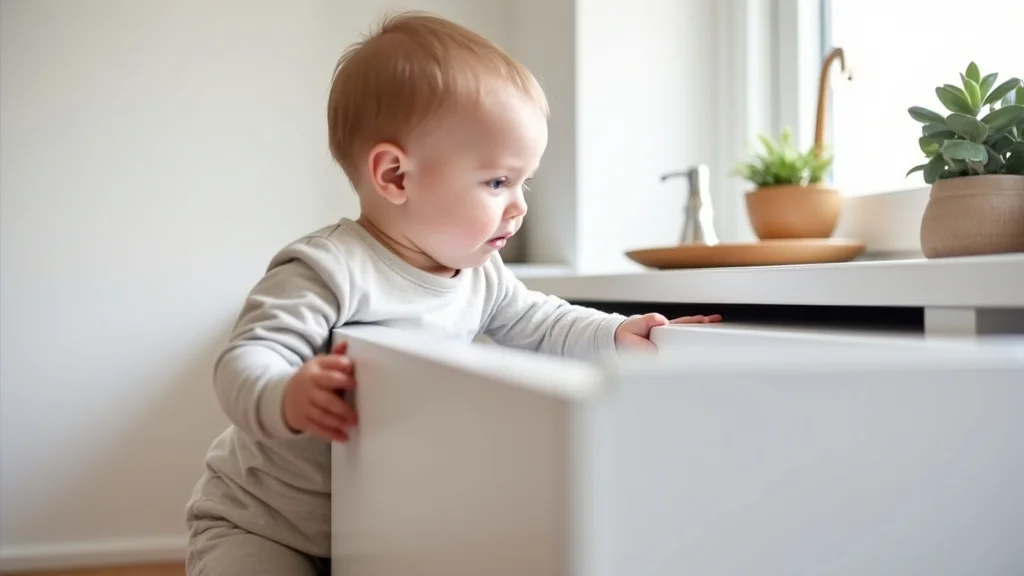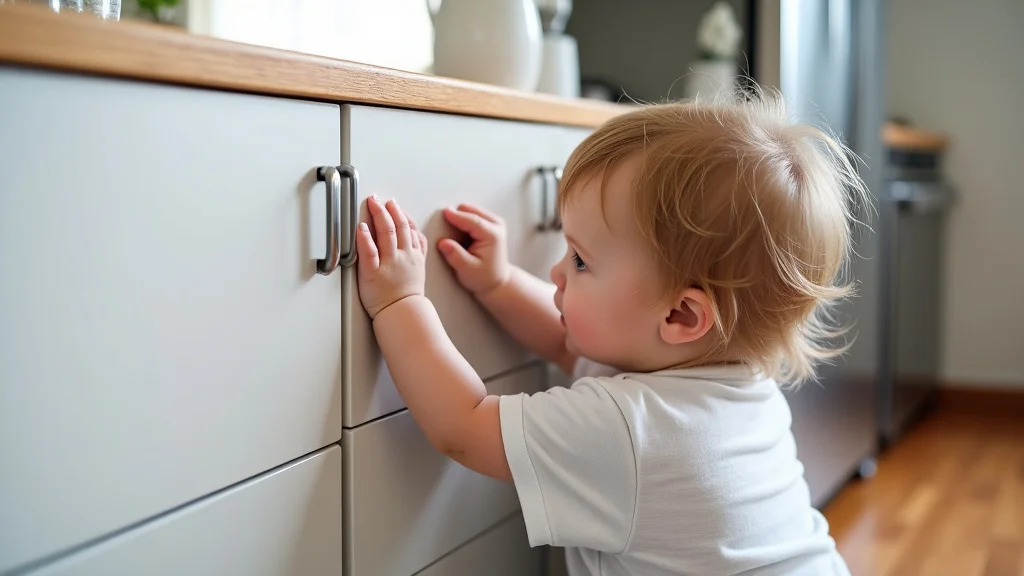
Your little one is crawling and suddenly everything looks like a potential adventure. You watch them toddle towards the kitchen cabinets, hands reaching for knobs and handles, and your heart skips a beat. You realize it’s time for safety, and that means figuring out the best way to baby proof for cabinets. This post will guide you through easy, effective ways to secure your cabinets, giving you peace of mind while your baby explores their world. You will learn simple yet powerful techniques to keep your child safe from household hazards, making your home a secure haven for their curious adventures.
Key Takeaways
- Learn about different types of cabinet locks and their suitability.
- Discover easy installation methods that don’t damage cabinets.
- Understand how to childproof cabinets in kitchens and bathrooms effectively.
- Find budget-friendly options for baby proofing your home.
- Get tips on maintaining safety as your child grows.
- Know which common household items are most dangerous in cabinets.
Why Baby Proof for Cabinets is Essential
Keeping your home safe for a curious toddler is a top priority for any parent. As babies begin to crawl and walk, their exploration expands rapidly, and they are drawn to anything new and interesting. Cabinets and drawers, often containing cleaning supplies, sharp objects, medications, or heavy items, pose significant risks. Without proper safety measures, a child could access dangerous substances or injure themselves. Effective baby proofing for cabinets creates a secure environment, preventing accidents and allowing children to explore their surroundings without immediate danger.
This proactive approach to home safety is not just about preventing immediate harm; it’s about fostering a child’s independence in a protected space. When parents are confident that their home is secure, they can relax more and allow their children to engage in age-appropriate exploration, which is vital for cognitive and physical development. Investing time and effort into securing cabinets contributes directly to a child’s well-being and a parent’s peace of mind, reducing the constant stress of supervision.
-
Children’s curiosity is a natural part of development, leading them to explore their environment.
This exploration is crucial for learning and understanding the world around them. However, it also means they might reach for things that are unsafe.
-
Cabinets often store hazardous materials that are appealing to young children.
Think about cleaning agents, sharp kitchen tools, or medicines. These items can cause serious harm if ingested or handled improperly by a child.
-
Baby proofing cabinets significantly reduces the risk of accidental poisonings and injuries.
Properly installed locks and latches act as a barrier, preventing access to dangerous contents and thus safeguarding your child from potential harm.
Types of Cabinet Locks and Latches
When it comes to baby proof for cabinets, there’s a wide variety of locks and latches available, each with its own strengths and installation methods. Choosing the right type depends on your specific cabinets, your child’s dexterity, and your budget. Understanding these options will help you make the best decision for your home.
Adhesive Cabinet Locks
These are among the most popular and easiest to install. They use strong adhesive backing to attach to the cabinet door and frame.
Adhesive locks are great because they don’t require any drilling or permanent modifications to your cabinets, making them ideal for renters or those who prefer not to alter their furniture. They work by creating a strap or a magnetic system that prevents the cabinet from opening until the lock is disengaged. Installation typically takes just a few minutes per cabinet.
You simply clean the surface, peel off the backing, and press the lock firmly in place. For best results, allow the adhesive to cure for a period, usually 24-48 hours, before applying significant force.
-
Ease of installation without tools.
This is a major advantage for busy parents. You can childproof an entire kitchen in under an hour without needing a screwdriver or drill.
-
Suitable for various cabinet types.
Adhesive locks can often be used on cabinets with different handle styles and door configurations, providing versatile protection.
-
Consideration for removal.
While they are strong, most adhesives can be removed with heat or specific removers. It’s wise to test a small, inconspicuous area first if you are concerned about damaging the cabinet finish.
Magnetic Cabinet Locks
These locks operate on a magnetic system, meaning there is no visible lock on the outside of the cabinet.
Magnetic locks are a sleek and effective solution for baby proof for cabinets. They consist of two parts: a magnetic “key” and a latch installed inside the cabinet door. When the magnetic key is held near the outside of the cabinet door, it retracts a bolt, allowing the door to open.
Without the key, the latch securely holds the door shut. This system is particularly appealing because it completely hides the locking mechanism, maintaining the aesthetic appeal of your kitchen or bathroom cabinets. Installation involves screwing the latch and catch plates onto the inside of the cabinet door and frame.
While it requires a screwdriver, the process is still relatively simple.
| Feature | Adhesive Locks | Magnetic Locks |
|---|---|---|
| Visibility | Visible on the outside | Completely hidden |
| Installation | Peel and stick | Screws required |
| Aesthetics | Can be less appealing | Maintains cabinet appearance |
| Ease of Use | Easy to open, sometimes tricky to re-lock | Requires magnetic key, very easy once familiar |
Spring-Loaded Cabinet Latches
These latches are typically screwed onto the cabinet door and frame, and they work by using a spring mechanism to keep the door closed.
Spring-loaded latches are a more traditional but still effective method for baby proof for cabinets. They are usually made of plastic and are installed with screws. The latch mechanism engages when the cabinet door is closed, and to open it, you often need to push down on a small tab or lever, releasing the spring tension.
These can be a good option for cabinets that you don’t open very frequently, as they provide a secure closure. Installation involves aligning the latch and strike plate components carefully so that they engage properly when the door is shut. It’s important to ensure the alignment is precise for the latch to function correctly and securely.
-
Durability.
When installed correctly, spring-loaded latches can be very durable and withstand regular use.
-
Cost-effectiveness.
Often, these latches are very affordable, making them a budget-friendly choice for extensive baby proofing.
-
Potential for damage.
Since they require screws, installation will create small holes in your cabinets. This is usually not an issue for most homeowners but should be considered by renters.
Slide Locks
These are simple plastic devices that slide into place to prevent cabinet doors with adjacent knobs or handles from opening.
Slide locks are incredibly straightforward and require no installation at all. They are designed for cabinets that have two doors with knobs or handles positioned close to each other. The lock is a U-shaped piece of plastic that you simply slide between the two doors, preventing them from being pulled apart.
This is one of the quickest and most convenient ways to baby proof for cabinets, especially in high-traffic areas like the kitchen where you need frequent access. They are easy for adults to remove when needed but are usually too stiff or difficult for young children to disengage.
-
No installation required.
This is their biggest advantage. You can apply and remove them instantly without any tools or permanent changes.
-
Limited application.
They only work on cabinets that have two doors with handles or knobs that are close enough to be bridged by the lock. They won’t work on single doors or cabinets with flush handles.
-
Portability.
Their ease of use makes them great for travel or if you need to quickly secure a specific cabinet temporarily.
Cord Locks
These locks are designed for cabinets with knobs or handles and work by looping a cord around both.
Cord locks offer another simple, tool-free option for baby proof for cabinets. They are typically made of flexible plastic and feature a locking mechanism. You thread a short, strong cord through or around cabinet knobs and then secure the cord with the lock.
This effectively prevents the doors from opening. They are particularly useful for cabinets that have knobs or a specific handle design that slide locks cannot accommodate. Their flexibility means they can adapt to various knob sizes and distances.
-
Tool-free convenience.
Like slide locks, cord locks are quick to apply and remove, making them very practical for everyday use.
-
Adjustable fit.
The cord can often be adjusted to fit different distances between knobs, offering good versatility.
-
Potential for wear.
Over time, the cord material might show signs of wear, and the locking mechanism might become less secure with constant manipulation.
Installing Baby Proof Cabinet Locks Effectively
Proper installation is key to ensuring your chosen locks work effectively to baby proof for cabinets. Even the best product can fail if not installed correctly. Always follow the manufacturer’s instructions, as they are specific to the product you have purchased.
Preparation is Key
Before you start applying any locks, take a moment to prepare. Clean the surfaces where the locks will be attached. For adhesive locks, this means ensuring the cabinet surface is free of dust, grease, or grime. This will help the adhesive bond properly and last longer. For screw-in locks, ensure you have the correct screwdriver and that the alignment of the parts will allow the lock to engage securely.
Many parents overlook this step, only to find their locks come loose after a few weeks. A clean surface means a stronger, more reliable hold for adhesive products.
Placement Matters
Consider where you are placing the lock. For magnetic locks, ensure the interior latch and exterior catch are aligned so the door closes properly and the magnet can engage the latch. For adhesive locks, make sure they are positioned so they create enough tension to prevent the door from opening, but not so tight that they damage the cabinet frame when opened.
Think about how your child might try to open the cabinet. While they won’t have the adult strength, they can be surprisingly persistent and creative. Placing locks in a way that makes them harder to reach or manipulate is beneficial.
Testing Your Locks
Once installed, always test each lock. Gently try to pull the cabinet door open. You want it to be secure enough that a toddler cannot easily force it, but not so difficult that you struggle to open it yourself when needed.
This testing phase is crucial. It confirms the lock is functioning as intended and gives you confidence in its security. If a lock feels loose or doesn’t engage properly, adjust or reapply it according to the instructions.
-
Adhesive lock curing time.
Most adhesive locks require a 24-48 hour curing period for the adhesive to reach its maximum strength. Resist the urge to test them vigorously before this time is up.
-
Screw alignment for latches.
For latches that require screws, ensure the parts align perfectly. Misalignment can cause the latch to not engage or to be easily dislodged.
-
Child’s ability versus adult ease.
The goal is to create a barrier for a child, not an insurmountable obstacle for an adult. The lock should be easy for an adult to operate quickly and efficiently.
Sample Installation Scenario: Magnetic Locks in a Kitchen
Imagine you’re installing magnetic cabinet locks in your kitchen.
- Clean the inside of the cabinet door and the cabinet frame where the latch and catch will be placed.
- Hold the cabinet door closed. Position the latch part inside the cabinet door, near the top or side, so that when the door is closed, it will align with the catch plate installed on the cabinet frame.
- Mark the screw holes for the latch on the door. Drill pilot holes if necessary (depending on cabinet material and lock instructions). Screw the latch securely to the door.
- With the door still closed, position the catch plate on the cabinet frame so that it will meet the latch when the door closes. Mark the screw holes.
- Install the catch plate onto the cabinet frame with screws.
- Test the lock by closing the door. Use the magnetic key to open it. Ensure the latch engages and disengages smoothly. Repeat for all desired cabinets.
Where to Use Baby Proof for Cabinets Solutions
While the kitchen is often the primary focus for baby proofing, it’s essential to secure cabinets in all areas of your home where a curious child might explore.
Kitchen Cabinets
This is where most parents start, and for good reason. Kitchen cabinets often contain cleaning supplies, sharp utensils, appliances, and even breakable dishes.
Securing these cabinets is paramount. Think about what’s inside each one. Low cabinets are usually the first target for crawlers.
High cabinets might contain medications or chemicals that are still accessible if your child is a skilled climber or if you store them within reach after use. Products like dish soap, bleach, and drain cleaner are extremely dangerous if ingested. Knives, graters, and other sharp kitchen tools also pose a significant risk.
-
Cleaning supplies.
These are often brightly colored and might smell appealing to a child, but they contain harsh chemicals that can cause severe internal damage.
-
Sharp objects.
Knives, graters, peelers, and even broken glass can lead to serious cuts and injuries.
-
Appliances and cords.
Toasters, blenders, and other countertop appliances can be pulled down, and their cords pose a strangulation or electrical hazard.
Bathroom Cabinets
Bathrooms are another high-risk area. Cabinets here often store medications, toiletries, cleaning products, and personal care items.
Medications are a critical concern in bathrooms. Even over-the-counter drugs can be dangerous for children if taken in the wrong dosage or if they are not age-appropriate. Cleaning supplies used for toilets and showers are also highly toxic.
Razors, tweezers, and other sharp grooming tools should also be kept out of reach. Consider that children can sometimes fall into toilets or bathtubs, so even securing the toilet lid is part of overall bathroom safety.
-
Medications.
This includes prescription drugs, over-the-counter medicines, vitamins, and even beauty products that might be ingested.
-
Toiletries.
Products like mouthwash, nail polish remover, and hairspray can be harmful if swallowed or come into contact with eyes.
-
Cleaning agents.
Toilet bowl cleaner, bleach, and other harsh chemicals are extremely dangerous.
Laundry Room Cabinets
Laundry rooms often house detergent pods, bleach, fabric softener, and other concentrated cleaning chemicals.
Detergent pods are particularly dangerous because they look like small candies and can easily be mistaken for toys or food. Ingesting just one can cause serious injury. Liquid detergents and fabric softeners can also be toxic if swallowed or if they come into contact with skin or eyes.
It’s vital to secure all laundry supplies to prevent accidental exposure.
-
Detergent pods.
These are highly concentrated and can cause vomiting, breathing problems, and even seizures.
-
Bleach and fabric softener.
These can cause burns to the mouth, throat, and stomach.
-
Iron and ironing board.
These should be stored securely when not in use to prevent them from falling on a child.
Bedroom and Other Areas
Don’t forget about cabinets or drawers in bedrooms, garages, or workshops. These areas might contain items like adult tools, craft supplies, or personal items that could be hazardous.
In bedrooms, think about drawers containing sewing kits, sharp nail clippers, or small items that could be choking hazards. Garages or workshops are full of potential dangers, from power tools to chemicals. Even decorative items stored in cabinets could be breakable and pose a risk.
A comprehensive approach to baby proof for cabinets means looking at every accessible cabinet and drawer throughout your home.
-
Small objects.
Items like craft supplies, buttons, or small toys can be choking hazards.
-
Tools and hardware.
Nails, screws, hammers, and other tools found in workshops or garages can cause serious injury.
-
Personal items.
Small, unattended personal items can be ingested or broken, leading to injury.
Budget-Friendly Baby Proofing Options
You don’t need to spend a fortune to make your home safe for your little one. There are many affordable ways to baby proof for cabinets.
DIY Solutions
Sometimes, simple household items can be repurposed for safety. For instance, you might use rubber bands to tie cabinet doors shut temporarily, though this is less secure and not a long-term solution.
A more effective DIY approach involves using simple materials like velcro or even strategically placed furniture to block access. For instance, a heavy dresser placed in front of a cabinet can deter a toddler from reaching it. However, ensure furniture is anchored to prevent tipping.
Buying in Bulk
Many retailers offer multi-packs of cabinet locks at a reduced price per unit. This is a smart way to stock up and childproof multiple cabinets without breaking the bank.
Consider how many cabinets you need to secure. If you have a large kitchen or multiple areas to childproof, buying a value pack of adhesive locks or magnetic lock sets can be significantly more cost-effective than purchasing individual units.
Generic Brands
While well-known brands often have a reputation for quality, generic or store-brand versions of cabinet locks can be just as effective and much cheaper.
Do your research and read reviews for generic options. Often, they are manufactured in the same facilities and to similar standards as more expensive brands, offering a comparable level of safety for less money.
Re-purposing Old Items
If you have old cabinet latches from previous renovations or items you no longer need, they might be salvageable for baby proofing purposes.
For example, old drawer slides or simple hook-and-eye latches could potentially be adapted to create a basic locking mechanism, though this requires some DIY skill and careful consideration of safety.
-
Dollar store finds.
Many dollar stores offer a surprisingly good selection of basic cabinet locks and safety latches at very low prices.
-
Secondhand marketplaces.
You might find used but perfectly functional baby proofing items for sale online or at consignment shops.
-
Focus on high-risk areas.
If budget is a major concern, prioritize securing the cabinets with the most dangerous contents first.
Common Myths Debunked
Many parents have questions and misconceptions about baby proofing. Addressing these can help ensure you are implementing the most effective safety measures.
Myth 1: My child is too young to reach anything in the cabinets.
Babies develop rapidly. What seems out of reach one week can be easily accessible the next as they learn to crawl, stand, and even pull themselves up. It’s best to baby proof for cabinets proactively, before your child masters new mobility skills.
Myth 2: If it looks safe, it probably is.
A child’s perception of safety differs vastly from an adult’s. A brightly colored cleaning bottle, a shiny pair of scissors, or even small objects that look like toys can be dangerous if ingested or misused. Always assume anything accessible is a potential hazard until proven otherwise.
Myth 3: Cabinet locks are unsightly and ruin the look of my kitchen.
While some older styles of locks were more noticeable, modern baby proofing solutions, especially magnetic and some adhesive options, are designed to be discreet. Many are nearly invisible from the outside, allowing you to maintain your home’s aesthetic appeal while ensuring safety.
Myth 4: I can just supervise my child constantly.
Constant supervision is exhausting and nearly impossible to maintain 100% of the time. Even a moment’s distraction can lead to an accident. Baby proofing cabinets provides a crucial layer of passive safety, acting as a backup even when your attention is momentarily diverted.
Frequently Asked Questions
Question: How do I know when to start baby proofing cabinets
Answer: It is best to start baby proofing cabinets as soon as your baby begins to crawl or show an interest in exploring their environment, typically around 6 to 9 months of age. However, proactive baby proofing before this stage is always recommended.
Question: Can I use baby proof locks on antique or valuable cabinets
Answer: For antique or valuable cabinets, it’s advisable to use methods that don’t require drilling or permanent adhesive. Magnetic locks or some types of tension-based latches might be suitable. Always test any adhesive on an inconspicuous area first.
Question: How do I remove adhesive cabinet locks without damaging the cabinets
Answer: Most adhesive locks can be removed with gentle heat, such as from a hairdryer, which softens the adhesive. You can then carefully pry the lock off. Specialized adhesive removers can also be used, but test them on a small area first to ensure they don’t damage the cabinet finish.
Question: Are magnetic cabinet locks safe for children
Answer: Yes, magnetic cabinet locks are safe for children. The locking mechanism is located on the inside of the cabinet, and the child cannot access it directly. The magnetic key is typically kept out of a child’s reach.
Question: How many cabinets should I baby proof
Answer: You should baby proof all cabinets and drawers that contain hazardous materials or items that could cause harm to a child. This includes cabinets in the kitchen, bathroom, laundry room, and any other area accessible to your child.
Conclusion
Securing your cabinets is a vital step in creating a safe environment for your growing child. By understanding the different types of locks, their installation, and where they are most needed, you can effectively baby proof for cabinets. Prioritizing safety with simple and affordable solutions ensures your little one can explore their world with confidence, and you can enjoy peace of mind.