Last updated: October 27, 2026
Quick answer: How to Babyproof a Nursery Step by Step means making the room safe in this order: anchor unstable furniture, place the crib correctly, control cords and windows, then clear small objects before regular use.
Key Takeaways
- A step stool helps you check tall furniture and window hardware at a standing baby’s reach.
- Start with the biggest hazards, then refine the smaller details the baby can reach later.
- Put the crib on a clear wall, away from windows, blind cords, heaters, and hanging items.
- Anchor the dresser and changing table to studs, then remove anything that invites climbing or pulling.
What you need before you start
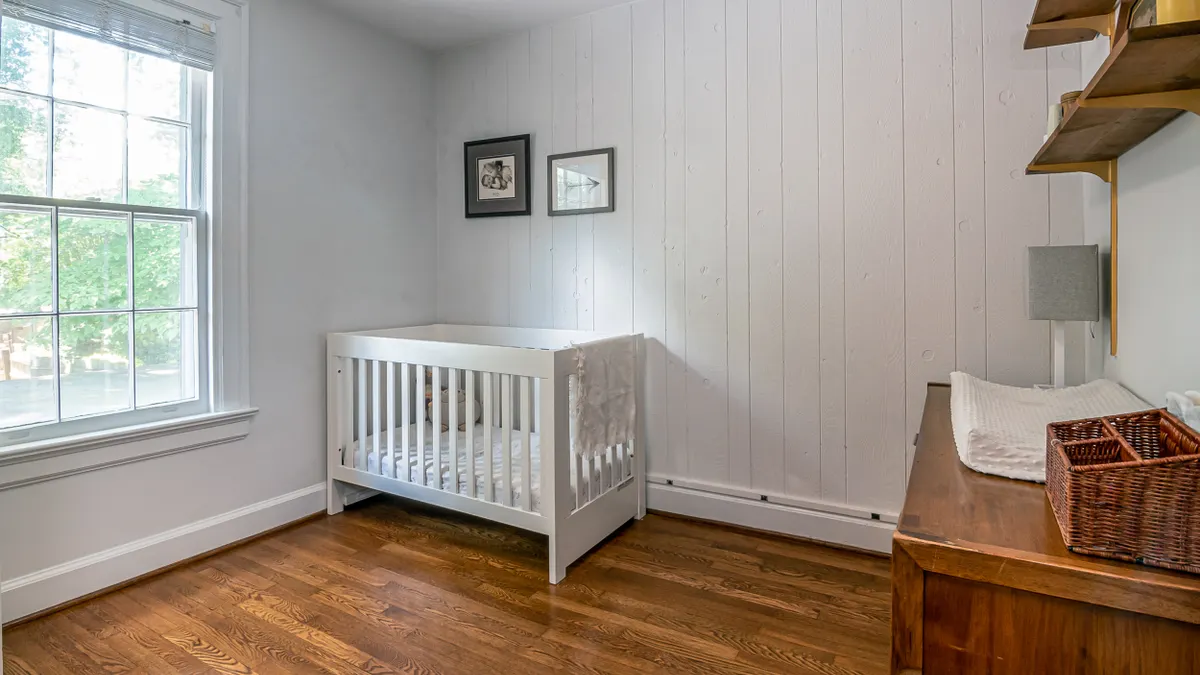
You need a tape measure, a screwdriver or drill, furniture straps that match your wall type, a crib that meets current safety standards, a dresser or changing table you can anchor, cord shorteners, and covers for any outlet or blind hardware within reach. A step stool also helps because you will need to check the top of tall furniture and window hardware at the same height a standing baby will reach. The American Academy of Pediatrics recommends a crib with a firm mattress and no loose bedding.
Start by emptying the nursery floor so you can see the room as a baby will. If you can’t walk one lap around the room without stepping over cords, baskets, or loose décor, the room is not ready. Keep a box for anything that does not belong there yet: picture frames, decorative pillows, glass lamps, wall hangings with cords, and anything under about 1 inch that can be swallowed. The room should feel plain before it feels cute.
A nursery also needs enough light to check the room at night without turning the space into a bright stage. Plan that now, before furniture blocks the outlets you need. If you are pairing this setup with the rest of the home, the hub on babyproofing essentials and room-by-room safety can sit alongside this guide.
How do I babyproof a nursery in the right order?
Babyproofing a nursery in the right order means securing the biggest hazards first, then refining the details the baby can reach later. Start with furniture and the crib, because those are the objects most likely to tip, trap, or fail if you wait until the room is decorated.
-
Clear the room and measure the layout. Take out loose décor, floor lamps, bins, and anything with cords, then measure the wall space where the crib, dresser, and changing table will sit. When this works, you have open floor space and a plan that keeps the crib away from windows, blinds, and furniture that could be climbed.
-
Place the crib away from windows and wall hangings. Put the crib on a solid wall, not under a window, shelf, framed art, or curtain pull. Leave enough space so the mattress is not brushing the wall. A crib that is placed correctly has no blind cords, curtain ties, or hanging décor within reach from the mattress.
-
Anchor the dresser and changing table. Use furniture straps to fasten each tall piece to wall studs or approved anchors. The result should be that the furniture does not move when you pull the top edge with firm pressure. If it shifts, the anchoring is not finished.
-
Shorten or remove every cord. Use cord shorteners on monitor cords, lamp cords, and any blind cords, and keep the slack entirely out of reach. Afterward, no cord loop should hang below furniture height or drape near the crib, changing table, or floor.
-
Set up the changing table with one-hand access. Keep diapers, wipes, cream, and spare clothes on the table or in a drawer you can open without turning away from the baby. A working setup leaves no reason to leave a baby unattended for even a few seconds.
-
Install outlet covers and a nightlight. Cover open outlets and place the nightlight where it cannot be grabbed from the crib or pulled from the wall. The room should stay dim enough for night care but not so bright that you need a larger lamp with a trailing cord.
-
Walk the room from baby height. Kneel and scan for sharp corners, dangling strings, buttons, small toys, or anything that can be tugged down. When this step is done, the nursery should look plain from floor level and feel boring to a toddler’s hands.
Where should the crib go?
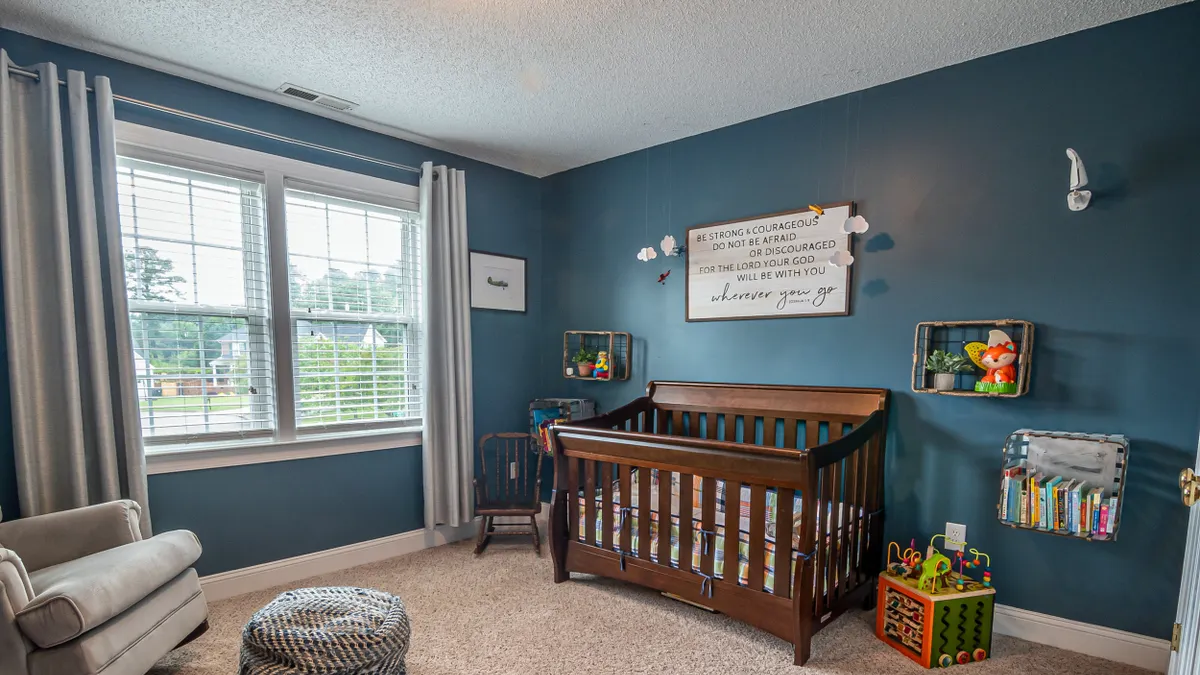
The crib should go on a clear wall, far from windows, blind cords, heaters, and anything that hangs. That placement matters more than matching the nursery theme, because the crib becomes the center of the room once the baby can pull up and stand.
Leave at least a practical buffer between the crib and nearby furniture so a child cannot use another object as a launch point. The mattress should sit at the correct crib height for the baby’s age and ability to sit or stand. If you lower the mattress, the room’s safety improves immediately because it becomes harder for a standing baby to climb out. The crib should never sit under shelving, art with cords, or curtains with accessible ties.
Do not place the crib next to a dresser that can be climbed like a ladder. A “safe crib” in a bad position is still a bad setup. Put the crib where a reaching hand cannot snag blind cords or knock objects from a shelf.
A common mistake is crowding the crib because the room is small. That saves floor space and creates a climbing route. If the nursery is tight, leave the crib on the most open wall and move storage to lower, anchored furniture. A crib should feel isolated, not nested inside decor.
How do I secure the dresser and changing table?
You secure the dresser and changing table by anchoring them to wall studs, then removing anything that invites climbing or pulling. This step matters because a dresser can tip forward long before it looks dangerous, especially if drawers are open and one side is loaded with diapers or blankets.
Use furniture straps or anti-tip anchors made for tall case goods. If the dresser came with hardware, follow that system; if not, use a rated anchor kit and mount it into studs when possible. The finished result should be that the furniture does not move when you tug the top, not one that rocks or lifts. A changing table should get the same treatment if it stands independently, and a professional installer can help if the wall type or hardware is unclear.
Then change how the drawers are loaded. Heaviest items should sit in the lowest drawers, not the top. Keep one drawer for quick-access items and one for backup clothes, but avoid packing the top with anything a child could pull down. The changing surface itself should stay uncluttered: diaper, wipes, cream, and one spare outfit are enough for the top.
Do not let the changing table double as a display shelf. Picture frames, candles, baskets, and tabletop organizers turn into projectiles or pull-down hazards. A plain top is safer than a styled one. If the changing table has open shelves, keep them empty or use bins that do not stick out over the edge.
A dresser is wrong for this setup if it cannot be anchored, if it wobbles on carpet, or if its top encourages climbing because of handles, edges, or pullout storage. In those cases, choose lower storage and skip the tall piece altogether.
What should I do about window blind cords and cords in the room?
You should remove reachable blind cords from the nursery entirely or secure them so a child cannot loop them around a neck or reach them from the crib. Blind cords are one of the few hazards in a nursery that can hide in plain sight, and they deserve the same urgency as furniture anchoring.
Start with the windows. If the nursery has looped blind cords, keep them out of the room’s reachable zone with a proper cleat, tension device, or cordless window treatment. The point is not to tidy the cord; the point is to remove reachable slack. If the window treatment cannot be made safe, replace it with a cordless option.
Then deal with the baby monitor and lamp cords. Route each cord straight down behind furniture, shorten excess length with a cord shortener, and keep the plug end inaccessible. A baby monitor should sit where it can see or hear the crib without dangling its power lead within grasping distance. If the monitor is battery powered, charge it outside the baby’s reach and return it to its mount or shelf afterward.
Do not run cords under rugs where heat or wear can build up, and do not bundle several cords together behind a crib just to hide them. Hidden is not safe. If a cord can be reached from the floor, from the crib, or from a standing toddler, it is still part of the hazard.
A nursery with clean cord lines looks sparse. That is the point. Clean lines are safer than soft décor when the baby starts standing.
Which nightlight placement is safest?
The safest nightlight placement is low on the wall, far from the crib, and out of reach from a child who can stand. A nightlight should help you see without adding a reachable plug, cord, or hot surface near the baby.
Choose a plug-in nightlight that sits in an outlet already covered by a child-safe plate or that plugs into a high, inaccessible outlet if the room has one. If the light has a cord, keep the excess short and behind furniture. The bulb should not face directly into the crib, because bright light can wake the baby and encourage you to add a bigger lamp later.
A floor lamp is usually the wrong choice in a nursery because it can be pulled down and often leaves a long cord across the room. Table lamps are only slightly better if they sit on a heavy, anchored surface and the cord is hidden. A nightlight wins because it creates less temptation and fewer moving parts.
The goal is a room that supports night feeding and diaper changes without giving a child something to grab. If you can walk into the nursery in the dark and find the changing area without turning on a bright overhead light, the placement is doing its job. If you have to step around a cord or reach past the crib to switch it on, move it.
What gets left out of a babyproofed nursery?
A babyproofed nursery leaves out loose décor, unsecured furniture, reachable cords, and small objects that fit through a choke tube. It also leaves out anything fragile or heavy enough to hurt if pulled down, even if it matches the room perfectly.
Keep glass frames, ceramic lamps, weighted bookends, drawer pulls that double as climbing holds, and hanging décor off the walls or above the crib. Skip mobiles and wall art that dangle within reach once the baby can sit or stand. If a shelf holds anything decorative, assume it will be grabbed and dropped.
This is also the place where many people overdo soft goods. Extra pillows, thick blankets, bumper pads, and decorative bedding may look finished, but they add clutter and can create unsafe sleeping conditions. A crib should stay simple. A nursery does not need to look sparse everywhere, but the sleep area should.
A generic article often forgets that a nursery changes fast. A newborn room is not a crawling baby room, and a crawling baby room is not a standing baby room. That is why the safest approach is not “decorate first, babyproof later.” The order should be safety, then furniture, then décor. If a room cannot stay safe after the baby starts pulling up, it was never fully babyproofed.
What mistakes most people make when babyproofing a nursery?
The biggest mistake is assuming the nursery is safe because the baby is still small. That delay costs you the chance to anchor furniture before drawers start opening and cords start getting grabbed. By the time the baby can stand, the room is already full of climbing opportunities.
Another mistake is only covering outlets and calling it done. Outlet covers matter, but they do nothing against a tipping dresser, a blind cord, or a monitor cord hanging over the crib. A nursery needs layered protection, not one token fix.
A third mistake is placing storage where it is convenient for adults and reachable for children. Open baskets on the floor, wall shelves above the crib, and dressers with easy-to-grab handles all look neat until a curious hand finds them. Safer storage is lower, anchored, and boring.
The last mistake is treating the changing table like a free counter. It is not. If the top is crowded, the odds of leaving a baby unattended rise. Keep the top spare and make the supplies easy to reach with one hand. That small constraint changes the whole room.
For product-specific details and room-by-room coordination, the hub on babyproofing essentials and room-by-room safety is the right next stop.
How do I make a nursery safe?
A safe nursery starts with anchored furniture, a crib placed away from windows and cords, and no reachable loose items on the floor or shelves. I would check the room from crawling height, then from standing height, because hazards change as a baby grows. If the room still has blind cords, unstable furniture, or small objects within reach, it is not finished. The AAP and CPSC both emphasize keeping sleep spaces clear and secure.
What should not be in a nursery?
A nursery should not contain loose blind cords, unanchored dressers, reachable lamps or monitor cords, small decorative objects, or heavy items on shelves above the crib. I would also leave out fragile décor and anything that can be pulled down with one grab. If an item is for display only, it usually does not belong in a baby’s room.
Do I need to anchor nursery furniture?
Yes, nursery furniture should be anchored if it is tall enough to tip or could be climbed. I would anchor dressers, bookshelves, and most changing tables to studs or approved wall anchors, then test for movement by pulling the top edge. If the piece shifts, the anchoring is incomplete. For older homes or unusual wall materials, consult a professional installer.
Drafted with AI; not yet reviewed by a person.