Last updated: October 27, 2026
Quick Answer: Babyproofing for a Baby Who Pulls Up on Furniture means anchoring heavy furniture first, clearing reachable surfaces within about 3 feet of standing height, and blocking windows and cords before the baby turns them into supports. In a 2023 CPSC report, furniture, TVs, and appliances were linked to 581 tip-over incidents and 18 deaths involving children under 18.
Key Takeaways
- A pulling-up baby can reach higher and steady themselves with one hand while the other grabs nearby objects.
- Anchor heavy furniture first, because tip-over risk is the most serious hazard in this stage.
- The first dangerous furniture is the piece the baby can both reach and destabilize: dressers, low bookcases, TV stands, changing tables, and anything with drawers or shelves.
- Babyproofing for standing support safety means shaping the room so the baby can pull up without unstable or sharp surfaces.
What changes when a baby starts pulling up?
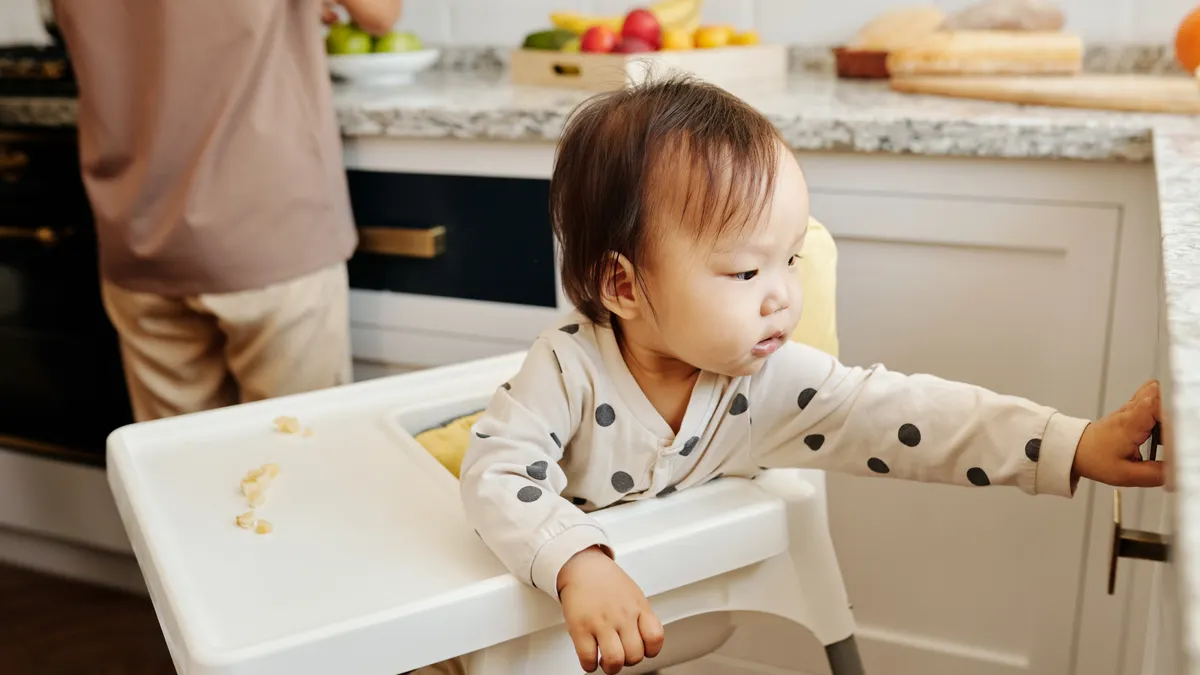
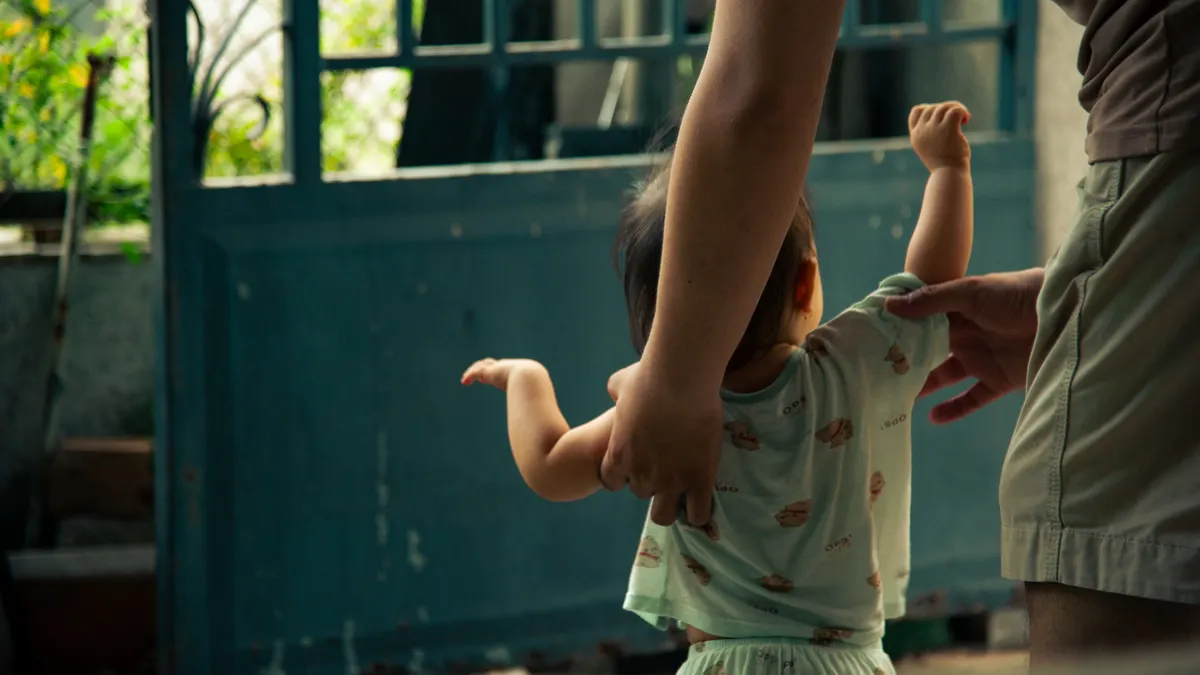
Babyproofing for a Baby Who Pulls Up on Furniture starts here: a pulling-up baby can reach higher, shift weight into furniture, and use one hand to steady themselves while the other grabs cords, lamps, books, or drawer pulls. That means the room’s risk profile changes fast, even if the baby cannot walk yet. A low shelf that was harmless yesterday can become a launch point today.
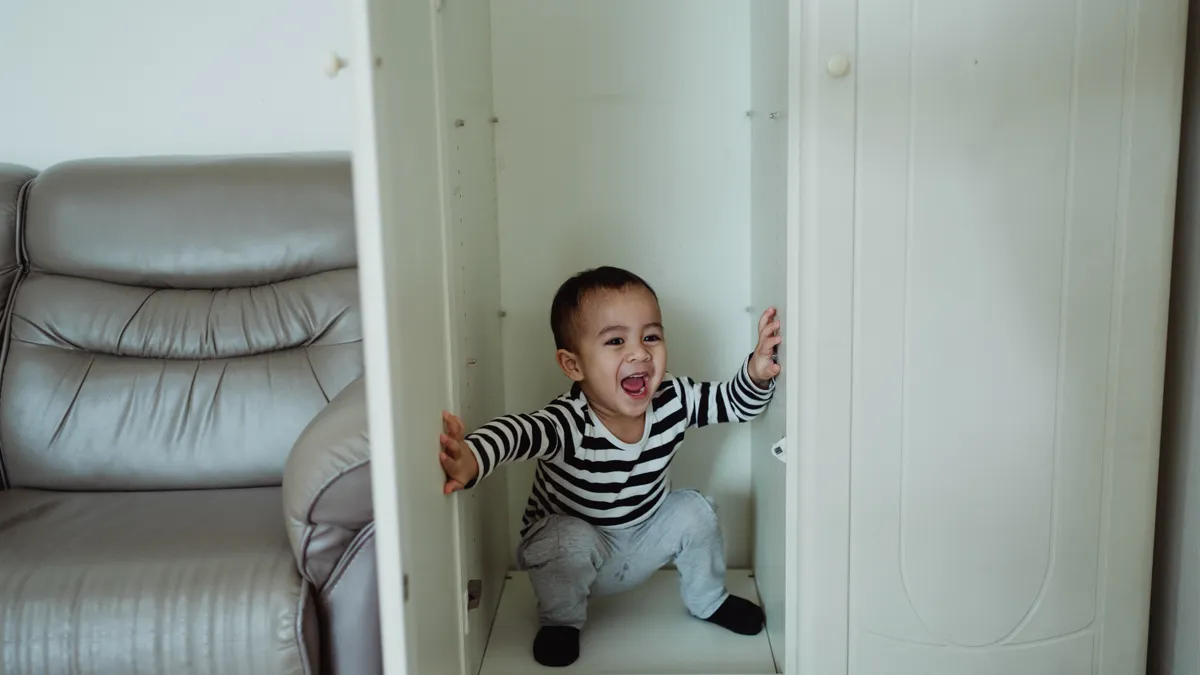
This is the stage where standing support safety matters more than floor clutter. The baby will use the couch edge, crib rail, coffee table, dresser drawer, or a bin as a brace. If the object slides, tips, or has a sharp corner, the baby can fall with their full body weight against it. A 28-inch dresser is not automatically dangerous because of height alone; it becomes dangerous when the baby can open a drawer and climb, or when the whole unit can tip toward them.
The biggest shift is that the baby’s hands are now reaching above countertop-like heights in a small body. A pulled-up baby can grab a lamp cord hanging 8 to 12 inches down, a framed photo on the edge of a shelf, or a cup left on a side table. That is why a room that looked “mostly babyproofed” often needs a second pass once pulling up begins.
This stage is not the right time to rely on verbal warning, constant spotting, or “they haven’t tried that yet.” Babies repeat successful movements. If a drawer opens once, they will go back to it. If a chair slides once, they will push on it again.
For a broader stage-based approach, this article fits the hub on convertible gear and stage-based safety, because the right fix changes as the baby’s reach and balance change.
Anchor the furniture before you do anything else
Anchor heavy furniture first, because tip-over risk is the most serious hazard for a baby who pulls up. A tall dresser, bookcase, TV console, or storage tower should not be able to lean forward if the baby opens a drawer, pulls on a shelf, or shifts weight against it.
Use dresser anchors or anti-tip straps for dressers, bookcases, and any tall freestanding unit. A wall anchor kit usually comes with straps, screws, and hardware meant to secure the piece to wall studs or another solid anchor point, but if the wall or furniture is unusual, consult a professional or follow the manufacturer’s guidance carefully. If the unit is on a plaster wall, drywall, or furniture with a thin back panel, follow the manufacturer’s hardware guidance carefully; the attachment point matters as much as the strap itself. Do not trust a piece of furniture just because it feels heavy when you push it by hand.
An anti-tip setup is not a place for improvisation with picture hooks or temporary adhesive. Those are the wrong tools for load-bearing furniture. The point is to stop forward rotation, not merely keep the piece from sliding a little. If a dresser can still shift a few inches, keep anchoring until it cannot rock.
A simple order helps:
- Start with the tallest and heaviest pieces in the room, such as dressers, bookcases, and TV stands, because they create the highest tip hazard.
- Install the included wall anchors or anti-tip straps at the manufacturer’s recommended height, so the load transfers into the wall instead of the drawer front or top shelf.
- Test the furniture by pulling gently on the upper edge and opening a drawer fully, then watching for rocking, tilting, or separation from the wall.
- Move anything tempting off the top surface, because a stable anchor does not help if a baby can still grab a lamp, frame, or remote from the edge.
This is the one step I would not skip, even in a small room. A corner guard can reduce a bump. An anchor can prevent a serious crush injury. Those are not the same category of fix.
Which furniture becomes dangerous first?
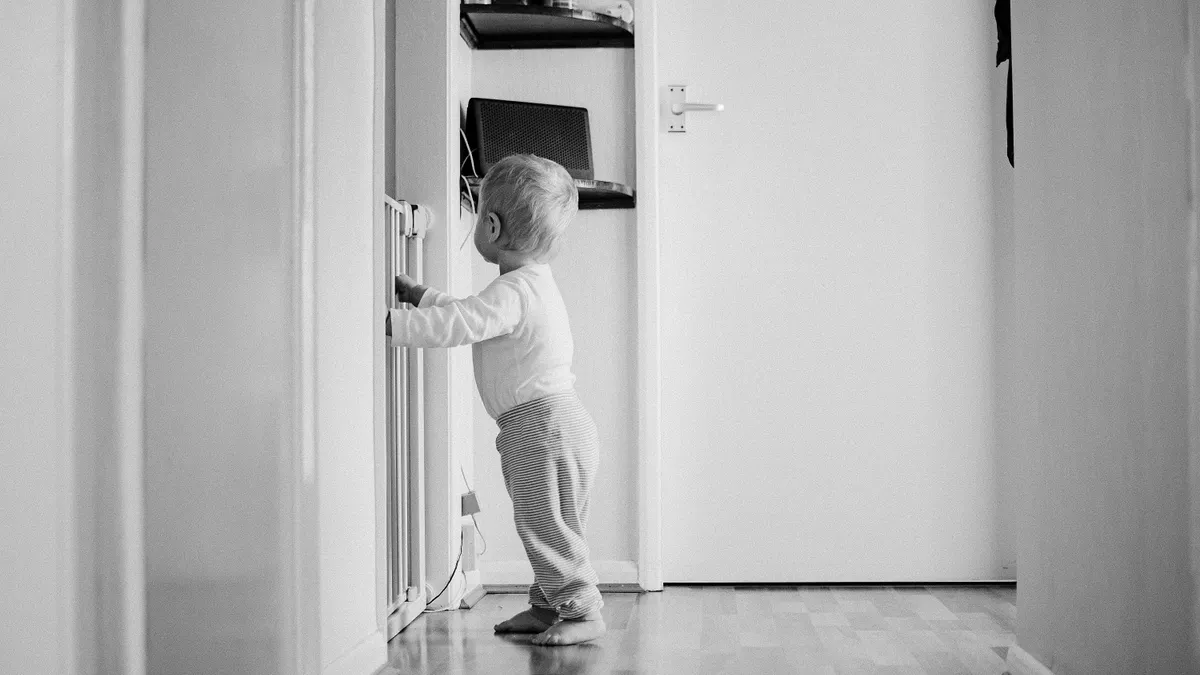
The first dangerous furniture is the piece the baby can both reach and destabilize: dressers, low bookcases, TV stands, changing tables, and anything with drawers or shelves that open outward. A low coffee table can matter too, but it is usually a second-layer hazard unless it has a sharp edge or the baby uses it as a climbing step.
Dresser anchors belong near the top of the list because drawers invite pulling and climbing. A baby who pulls up on a drawer front is not just touching the furniture; they are loading the drawer as a step. Open drawers change the center of gravity and can turn a stable-looking unit into a forward tip risk. If the furniture has more than one drawer, assume the lower drawers can become footholds even if the top one looks out of reach.
Shelf locks or child-safe latches help with cabinets and low storage that contain breakables, cleaning products, or cords. They are not a substitute for anchors on tall furniture. They answer different problems. A lock keeps a door closed. A strap keeps the whole piece upright.
Here is the practical cutoff: if a piece is taller than the baby’s chest while standing and can store enough weight to matter, it should be treated as a tip hazard, but a child-safety professional can help if the setup is unusual. If it has drawers, doors, or shelves the baby can open, it also needs access control. If it has a sharp top corner at head height, add corner guards or move the piece.
TVs deserve special attention. A flat-screen on a stand can be pulled forward if the baby grabs the screen edge, the stand shelf, or hanging cords. Wall-mounting is safer than leaving a TV perched on furniture, but the mount still needs proper installation. If the TV stays on furniture, anchor both the stand and the set-up around it, and keep remotes, game controllers, and cables out of reach.
A common mistake is assuming “heavy enough” means safe. Weight helps, but it does not guarantee stability once a toddler-level pull is added.
Babyproofing a room for standing support safety
Babyproofing for standing support safety means shaping the room so the baby can pull up without getting rewarded by unstable or sharp surfaces. The goal is not to remove every standing surface. The goal is to make the available surfaces boring, stable, and low-risk.
Start with the edges. Corner guards are useful on coffee tables, low shelves, fireplace hearths, and the ends of counters or side tables the baby can reach while standing. Choose guards that cover the point of impact, not tiny pads that leave most of the edge exposed. A soft guard on a 90-degree corner can lessen the impact when the baby loses balance and drops sideways.
Then deal with the surfaces themselves. Move breakable items, candles, table lamps, glass bowls, vases, and small electronics off anything the baby can reach from a standing position. If a baby can stand at the couch and then reach a console table, anything on that table is reachable too. Think in vertical bands, not just floor zones. In many rooms, that means clearing the lowest 30 to 36 inches of accessible surfaces.
Keep cords out of the pull-up path. A dangling lamp cord, phone charger, blind cord, or speaker cable can become both a tug point and a strangulation hazard. Route cords behind furniture, shorten slack, or remove the item from the room if it cannot be secured cleanly, but if you are unsure about the layout, consult a child-safety professional. This is one of those places where neatness and safety point in the same direction.
Flooring matters too. A thick rug pad or non-slip backing can help a pulled-up baby keep footing when standing at a couch or low shelf. The baby will still fall sometimes, but a slipping rug adds a second way down. A rug that bunches under pressure is worse than no rug at all.
Do not use unstable standing supports. A lightweight ottoman, rolling toy bin, or wheeled laundry basket is not a safe stand-assist. Babies often choose the object that looks easiest to grab, not the one you intended. A good rule is simple: if an adult can move it with one hand, the baby probably can too.
Windows, cords, and other higher-reaching hazards
Window guards and blind-cord fixes matter more once a baby can stand, because the baby’s reach expands fast and windows become reachable from a pull-up point. A standing baby can grab sill edges, screens, cords, and small objects on a windowsill long before they can walk.
Window guards should be treated as a real safety fixture, not a decorative add-on, but if you are unsure about the window type or installation, consult a professional. Screens stop bugs, not falls. A baby leaning on a screen can push through it or destabilize it. If a window opens, limit how far it opens and make sure the opening is not large enough for a child to pass through. If your setup does not allow that kind of control, keep the baby away from the window area entirely.
Blind cords deserve immediate attention. Looping cords, dangling pulls, and cords within reach can all create serious risk. Cord cleats, tension devices, or cordless blinds are better options than leaving loops loose near a crib, sofa, or play area. A 6-inch cord tail can still tempt a curious hand, so “mostly out of reach” is not enough.
Light fixtures, wall art, and shelf decor also move into the risk zone. A picture frame placed on a low ledge, a lamp with a heavy base, or a plant in a ceramic pot can be yanked down. Keep the bottom half of reachable wall space plain if you can. A baby who pulls up does not need a decorative shelf within arm’s length.
This is one place where a generic babyproofing list often misses the point. Floor outlet covers are still useful, but they are not the headline. The baby has moved up the wall.
For physical standards and product categories, the American Academy of Pediatrics and the Consumer Product Safety Commission both have guidance on home safety and furniture tip-over prevention. Their recommendations support the same practical rule: stop access to climbing hazards before the child can exploit them. If a home setup is unusual or a piece seems hard to anchor safely, a pediatrician or child-safety professional can help with product-specific questions.
What to do in the pulling-up zone, step by step
The pulling-up zone is the area from the floor to about the baby’s standing reach, and it needs a quick but deliberate reset. This is the part of the room that changes fastest, because it is where hands, knees, and feet all meet furniture.
- Walk each room at baby eye level, because you will spot the dangling cord, drawer pull, or shelf edge that disappears from adult height.
- Clear every surface the baby can touch while standing, including coffee tables, side tables, low shelves, and dresser tops, so there is nothing to grab and pull down.
- Anchor dressers, bookcases, TV stands, and other tall furniture with dresser anchors or anti-tip straps, because the baby will eventually use them as climbing support.
- Add corner guards to sharp low edges, especially on furniture corners at head height, so a sideways fall is less likely to end in a hard impact.
- Lock drawers, doors, and cabinet fronts with shelf locks or child-safe latches if the contents matter, because an open drawer becomes a step.
- Remove or secure window coverings, cords, and top-shelf objects, because standing reach is longer than most people expect.
- Test each change by tugging, opening, and pressing on it with a firm hand, because if it shifts under adult force it will shift more under a baby’s body weight.
This sequence works because it starts with the biggest injury risks and finishes with the smaller but still important ones. A room is not “done” when the baby cannot reach the candy jar. It is done when the baby cannot pull a heavy object onto themselves, use a drawer as a step, or grab a hazard from standing height.
Mistakes that matter most in this stage
The biggest mistake is babyproofing only the floor. That costs time later, because the baby keeps finding hazards that sit just above the old crawl zone: lamp cords, table corners, shelf decor, and open drawers. The fix is to think vertically and clear the whole pull-up band at once.
A second mistake is using the wrong kind of protection for the wrong job. Corner guards do not stop tip-overs. Shelf locks do not anchor a dresser. Anti-tip straps do not make a glass vase safe. Each tool has a narrow purpose, and mixing them up leaves the dangerous part untouched.
A third mistake is leaving “climbable” furniture in place because it seems useful. A low ottoman, storage cube, or rolling basket may help a baby stand, but that does not mean it is safe. If the object slides, rolls, folds, or tips, it becomes part of the fall. Swap it for a stable couch arm, a wall-mounted bar designed for the purpose, or simply keep the area clear.
Another error is thinking one room can be safe while the next room stays wild. Babies who pull up move with intent. If the living room is ready but the hallway has a low shelf with framed glass and a dangling charger, the problem simply moves.
The honest trade-off here is that pull-up babyproofing can make a room less pretty and less flexible. Wall anchors show. Cords get hidden. Furniture gets moved. That is the cost of this stage. It is temporary, and it is worth it.
If a piece of furniture cannot be anchored safely, cannot be moved, and remains within reach of the baby’s standing zone, it is wrong for this stage. Remove it or block access to the room until it can be dealt with.
What changes when a baby starts pulling up?
Babyproofing for a Baby Who Pulls Up on Furniture starts with reach: the baby can now reach higher, use furniture as support, and turn stable-looking objects into climbing aids. That means the risk moves from floor hazards to tip hazards, edge hazards, and reachable surfaces. Anchoring furniture and clearing standing-height zones become more urgent than simply covering outlets or picking up small toys.
Which furniture becomes dangerous first?
Dressers, bookcases, TV stands, and low tables with sharp corners become dangerous first. Anything with drawers, shelves, or open surfaces the baby can grab and pull from standing height should be treated as a higher-risk piece.
Drafted with AI; not yet reviewed by a person.