Last updated: October 30, 2026
Quick answer: babyproofing a kitchen for a toddler starting to explore usually begins with 5 priorities — stove, dangerous cabinets, sharp-tool drawers, cords, and trash — and the goal is to keep cooking workable.
In short: make the kitchen harder to reach, harder to open, and safer during active cooking, while leaving the adult workflow intact. How to Babyproof a Kitchen for a Toddler Starting to Explore is about blocking the most dangerous access points without turning every meal into a scavenger hunt for the cook.
Key Takeaways
- Protect the stove, risky cabinets, sharp-tool drawers, cords, and trash can first.
- Plan for the right hardware, a screwdriver, and a few minutes of layout decisions.
- Secure high-risk storage, shorten cords, and move hot or sharp items out of easy reach.
- Cover reachable knobs and keep the stove front clear of grab-and-drop hazards.
Start with the hazards that matter most in a kitchen
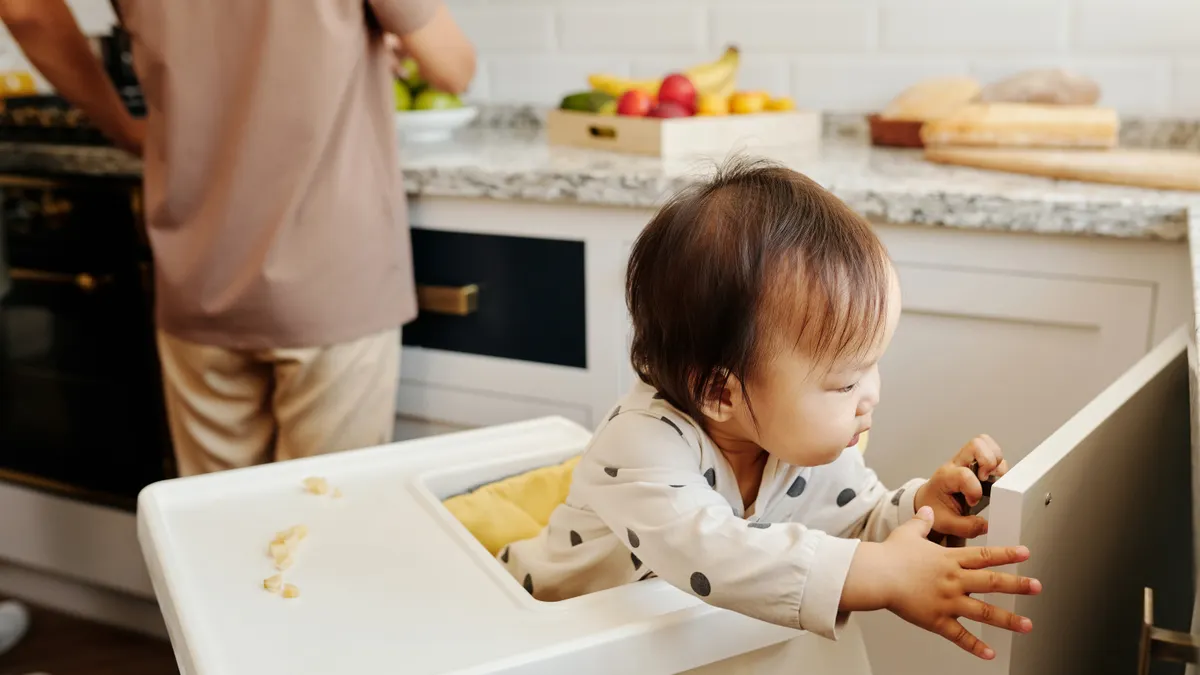
The fastest way to babyproof a kitchen is usually to protect the stove, cabinets with dangerous contents, drawers with sharp tools, cords, and the trash can first, because those are the spots a curious toddler reaches for during real daily use, especially when an adult is carrying hot food or turning away for 10 seconds.
Begin with a quick walk through the room at toddler height. Get on the floor and look for what is within arm’s reach, then what can be pulled down from the counter edge. A child who can cruise or climb a chair does not need much help to reach a handle, open a low drawer, or tug a cord. The most useful question is not “What could happen someday?” but “What can happen while I’m cooking dinner tonight?”
Keep the kitchen functional from the start. If the setup makes every cabinet annoying, the locks will come off. Use the easiest protection on the highest-risk spots: cabinet locks for cleaning products, drawer latches for utensil drawers, stove knob covers for burner controls, a trash can lid lock, and appliance cord shorteners for cords that dangle within reach. That mix protects the main danger zones without forcing the adult to stop using the kitchen normally.
This is also the point to decide what stays out of reach entirely. Knives, peelers, graters, razors, dish detergent pods, and glass cookware should not live in a low cabinet if there is any chance a toddler can get into it. Store them higher, behind a locked door, or in a drawer that is already being secured.
For a broader room-by-room plan, the hub on babyproofing essentials and room-by-room safety can sit above this page, but the kitchen needs its own setup because cooking-time risk is different from ordinary storage risk.
What you need first before you install anything
You need the right hardware, a screwdriver if your locks use screws, and a few minutes to choose which spaces are worth protecting. The tools are simple; the planning is what keeps the kitchen usable.
A practical starter set usually includes:
- stove knob covers
- cabinet locks
- drawer latches
- trash can lid locks
- appliance cord shorteners
If a cabinet is full of harmless plastic containers, you may not need a lock on that one. If a drawer holds foil, dish towels, or plastic wrap, a latch may be enough. Reserve the harder-to-open hardware for the cabinets that contain bleach, dish pods, sharp tools, or breakables.
Check how your cabinets and drawers close before buying anything. Some systems use adhesive; others need screws. Adhesive can be quick, but it can fail on dusty wood, oily painted surfaces, or textured finishes. Screw-in hardware takes longer and leaves marks, but it tends to hold better on doors and drawers that get used all day. If the kitchen gets wiped often with cleaning spray, adhesive may need more careful placement than the package suggests.
Measure the spaces around the stove and trash can too. A lid lock that works on a round bin may be awkward on a pull-out trash drawer. A cord shortener needs enough slack to keep a blender or toaster from being yanked, but not so much slack that it creates a loop within reach.
The cleanest setup is the one you can live with for months. If a lock blocks the dishwasher detergent cabinet that you open ten times a day, move the detergent somewhere better instead of fighting the hardware forever.
How do I babyproof the kitchen step by step?
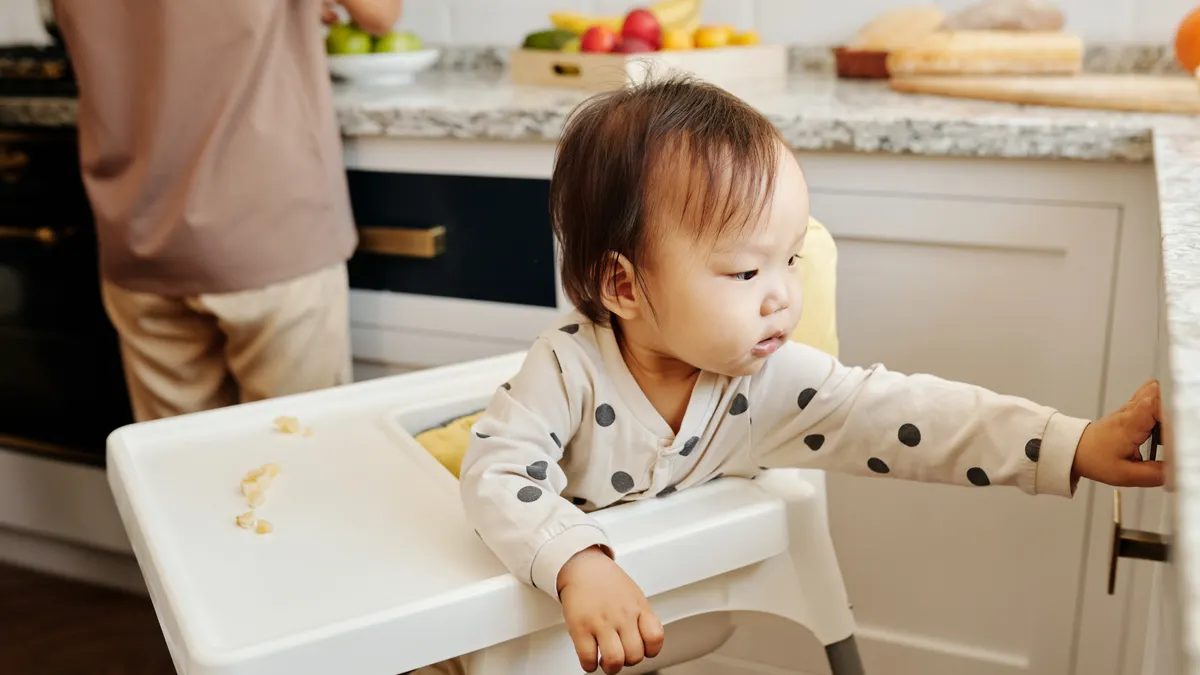
You babyproof the kitchen by securing the stove, locking the dangerous storage, shortening cords, and moving hot and sharp items out of easy reach in that order, while checking each change against your cooking routine.
- Secure the stove first. If your range has reachable knobs, add stove knob covers and remove tempting items from the front burners; if the layout is tricky, consult a professional about the safest setup. The result should be a smooth knob surface that small hands cannot turn easily, and a stovetop with nothing light enough to grab and pull.
- Move hot and sharp items away from the front edge. Keep kettles, skillets, baking sheets, and knife blocks away from the counter lip. Leave at least several inches of clear space behind the front edge so a grab does not bring hot metal down with it.
- Lock the cabinets with the most dangerous contents. Use cabinet locks on cleaners, detergents, alcohol, glass storage, and anything sharp or breakable. The cabinet should still open for an adult without a fight, but not without the latch or lock being released.
- Add drawer latches where there are sharp tools. If the drawer contains knives, peelers, graters, skewers, matches, or heavy utensils, secure it with a latch or consult a professional if the drawer design is unusual. A working latch stops the “open and dump” habit before the drawer becomes a step stool for climbing.
- Shorten or route appliance cords out of reach. Use appliance cord shorteners on the toaster, blender, slow cooker, or coffee maker if cords hang down where a child can grab them. When it works, the cord sits close to the counter or wall instead of swinging freely.
- Lock the trash can. Choose a trash can lid lock or move the bin behind a door if possible. The aim is to keep out food scraps, plastic bags, sharp cans, and anything a toddler might try to eat or scatter across the floor.
- Test every change with one hand while imagining a busy cooking moment. Open the cabinets you use daily, turn the stove knobs you need, and pull out the trash the way you would while carrying a pan. If a setup makes basic cooking slow enough that you stop using it, adjust the hardware now rather than later.
This step order matters because the stove and hot items create the most immediate injury risk during cooking time. Cabinet locks and drawer latches reduce access, but they do not replace active supervision near heat, knives, or boiling water.
How to handle the stove without ruining your cooking routine
You keep the stove safer by covering the knobs, clearing the zone around the burners, and treating the front edge of the range like a no-drop area. The point is not to make cooking awkward; it is to remove the easiest ways a toddler can cause a burn or startle an adult at the stove.
Stove knob covers are the first line of defense because knobs are small, interesting, and easy for a toddler to twist. Put a cover on each control the child can reach, not just the one that seems obvious. If your range has front-facing knobs, this matters even more, since a child can reach them from the floor or by climbing a low stool. If the model has electronic controls higher up, you still want to keep any reachable buttons or nearby utensils out of sight.
Keep anything hot off the front burners when they are not in use. A pan handle hanging over the edge invites a grab. A kettle near the front can be bumped. Even a towel draped from the oven handle can tempt a pull. Keep oven mitts, dish towels, and pot holders away from the front panel if a toddler can reach them.
This is also where cooking habits matter more than gear. Turn pot handles inward. Use back burners when possible. Avoid carrying a loaded pot with one hand while reaching for something low with the other. Those habits sound basic because they are, but they are the habits that keep babyproofing from being the only defense.
If the stove sits in a tight galley or against a walkway, this is the area where babyproofing has limits. A determined toddler who can climb and reach will still need close supervision whenever the burners are on. Hardware helps, but it does not make a hot stove safe enough to ignore.
For real-world guidance, the American Academy of Pediatrics has pediatric home-safety materials that stress keeping children away from hot surfaces and kitchen hazards. Consumer Product Safety Commission guidance on childproofing also supports using barriers and latch-type controls around high-risk household areas.
Where should knives, cleaners, and trash go?
Knives, cleaners, and trash should go in places a toddler cannot open or reach without adult help, and that usually means high storage, locked storage, or a cabinet that is already secured with child-resistant hardware.
Knife storage deserves special attention because a knife block on the counter looks tidy but sits in the danger zone. A toddler can pull it down or grab individual blades if the block is low enough. A top drawer with a latch, a high drawer, or a wall-mounted magnetic strip placed well above reach is safer. If you use a magnetic strip, make sure the knives are out of the child’s sight line as well as out of reach; visible shiny objects are a strong magnet for curious hands.
Cleaners need even stricter treatment. Dish pods, bleach, spray cleaners, dishwasher detergent, and drain products should stay in a locked cabinet, not a simple “hard-to-open” drawer. A cabinet lock is worth the small inconvenience here because the consequence of access is serious. Keep cleaners in their original containers so there is no confusion later.
The trash can is not just about mess. It can hold chicken bones, plastic wrap, foil, broken glass, moldy food, and sharp can lids. A toddler often explores with the mouth as much as the hands, so a lid lock or enclosed trash drawer makes sense. If the bin cannot be locked securely, move it behind a pantry door or inside a cabinet the child cannot access.
One common mistake is to put dangerous items “just for today” on the counter while cleaning or cooking. That is when accidents happen. Set a habit: if the item is dangerous enough to lock away, it gets put back right away, not after the meal is over.
What to do about cords, small appliances, and daily-use clutter
You control cords and small appliances by reducing the amount that hangs, loops, or sits at toddler level. Appliance cord shorteners are useful here because they keep tempting cords from becoming handles.
Toaster cords, blender cords, coffee maker cords, slow cooker cords, and mixer cords all deserve a look. If a cord dangles from the counter edge, a toddler can tug it and bring the appliance or hot contents down. Use a cord shortener or route the extra length behind the appliance so only the needed portion is exposed. The goal is a clean line from appliance to outlet with no loose loop hanging over the edge.
Small appliances also need a placement plan. A toaster that sits at the front of the counter is more likely to be touched, tipped, or yanked. Move it back. If you have a coffee maker with a hot carafe or a single-serve machine with a reachable reservoir, place it where a child cannot stand directly beside it. The same goes for rice cookers, air fryers, and electric kettles: if they heat up, they should not live at the front edge.
Daily clutter matters more than people expect. Mail, keys, dish soap, fruit bowls, and snacks often gather on the counter in the same places where a toddler can reach up and pull. Clear one “safe zone” on the counter for actual cooking and keep the rest less interesting. A kitchen that is visually calm is easier to police because you can see a hazard the moment it lands there.
Avoid overloading the room with too many gadgets and locks in places you use constantly. If every drawer takes two hands and a minute to open, the system will get bypassed. A kitchen that stays babyproofed is one that still works for adults at 6 p.m. on a weekday.
Common mistakes that make babyproofing fail
The most common mistakes are locking the wrong cabinets, leaving tempting items visible, and choosing hardware that is too irritating to use every day. Those errors cost you time at best and attention at the worst moment at worst.
A frequent mistake is securing storage with kitchen junk in it and leaving the dangerous cabinet alone because it is “usually closed.” The cost is obvious: the toddler finds the one place that matters. Fix it by making the locks match the risk. Safe items can stay unlocked; dangerous ones should not.
Another mistake is relying on a single barrier. A stove knob cover does not solve hot pans. A cabinet lock does not solve a dangling cord. A trash lock does not solve a knife block on the counter. Each piece covers a different hazard, and the kitchen needs more than one layer.
People also underestimate reach. Toddlers climb chairs, step stools, lower drawers, and even other appliances. A lock placed only a few inches higher than the child’s hand may buy little time. Move the dangerous item higher, not just farther back, when you can.
Finally, some kitchens are “babyproofed” in theory but impossible to live in. If the adult opens a locked cabinet so often that the lock comes loose in a week, the system failed. The better fix is to move the contents, not just add stronger hardware. A good setup protects the child and still lets the adult cook a normal dinner, pour a drink, and take out the trash without a battle.
How to keep the kitchen workable after the first week
You keep the kitchen workable by checking the hardware after the first few days and adjusting the pieces that slow you down most. The best setup is the one you can maintain on a tired Tuesday, not just on installation day.
Watch the flow of an ordinary meal: grabbing a pan, opening the utensil drawer, unloading a dishwasher, moving the trash, and wiping the counter. If one lock keeps failing or one cabinet is constantly bypassed, change the storage location or the hardware style. A drawer latch may work better than a cabinet lock on a narrow utensil drawer. A screw-in catch may hold better than adhesive on a heavy door. A different trash can may be easier than a lid lock that jams every other day.
Check the setup again after about a week of normal use. Doors settle, adhesive loosens, and adults develop shortcuts. This is when you find out whether the babyproofing is real or just decorative.
A final review after a weekday dinner rush can show what still needs attention. If a knob cover slips, a cord still hangs, or a drawer latches but feels too slow, adjust it then. Small changes often keep the whole system usable.
Overall, How to Babyproof a Kitchen for a Toddler Starting to Explore works best when it protects the highest-risk spots first, keeps dangerous items up high or locked, and leaves the kitchen practical enough that adults keep using it every day.
Drafted with AI; not yet reviewed by a person.